Who needs the FIFA World Cup?
Certainly not Bulgaria, which is still basking in the glow of winning one of Europe’s most coveted titles in arguably one of the world’s most over-the-top competitions – the Eurovision Song Contest.
The Balkan nation claimed its first Eurovision crown in the contest’s 70-year history with the infectious dance anthem Bangaranga, performed by Bulgarian pop star Dara.
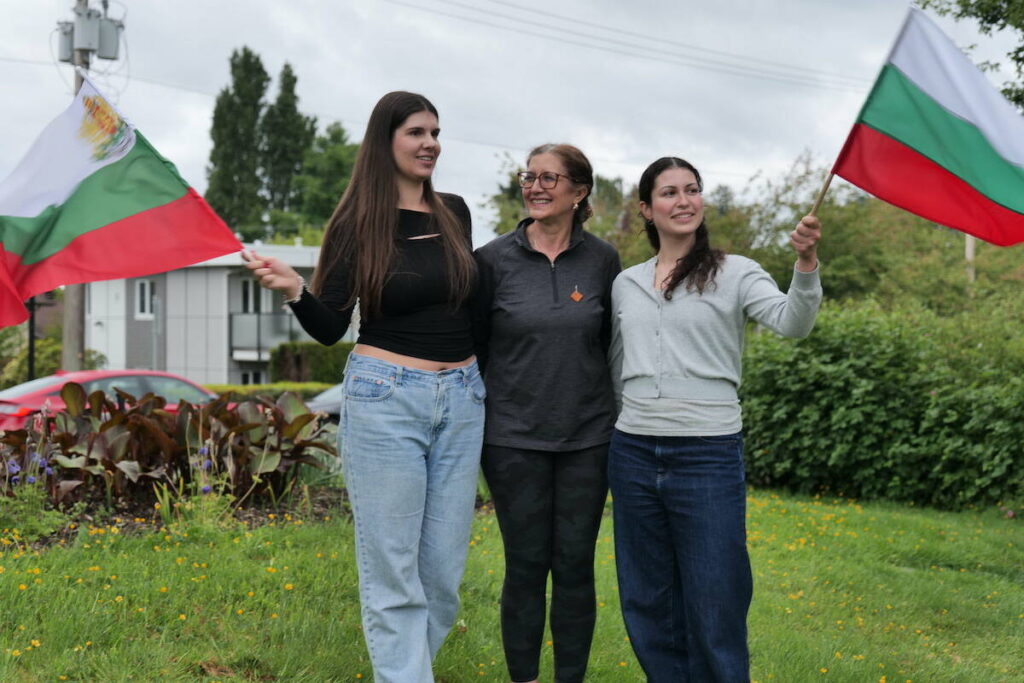
Joining the ranks of previous winners such as ABBA and Celine Dion, Dara has received a hero’s welcome in her home country. The celebrations have even reached as far as right here in Greater Victoria among the region’s Bulgarian community.
For members of folk dancing group Sini Balkani, the victory is a major talking point.
“I think it’s really brought Bulgarians together,” said Elizabeth Tzatcheva. “It’s brought hope within our nation, but also excitement – everyone’s just really excited right now.”
The win was unexpected, with Finland tipped to snatch the crown. Even Australia – yes, despite not being part of Europe – was considered a serious contender, fronted by songstress and former Neighbours star Delta Goodrem.
“Our jaws hit the floor,” said Theodora Borissov, who was watching at home with her husband. “Winning Eurovision, to us, that was a miracle.”
Theodora’s daughter Stephanie Borissov, received the news while at work – a text message from her mom breaking the news.
“I was genuinely taken aback,” she says. “But I think it was the perfect song for Eurovision, because Dara had the visuals, the performance, and the song was good as well.”
For those unfamiliar with the televised spectacle, Eurovision has often been described as the Olympics of pop, with participating countries each sending an artist or group to perform an original song, judged both by national juries and the viewing public, all 166 million of them.
As well as launching multiple singing careers, the contest has also helped catapult cultural phenomena into the global zeitgeist, most famously Irish dance show Riverdance, which debuted as Eurovision’s interval act in 1994. Even the queen of pop herself Madonna graced the Eurovision stage in 2019, long before she was booked to get into the groove at the FIFA World Cup 2026 final.
The cult event even spawned its own Netflix movie in 2020, starring Hollywood funnyman Will Ferrell.
For Saanich mother and daughter, Theodora and Stephanie, Eurovision has been a constant soundtrack throughout their lives, with the music of ABBA often filling their home.
In recent years, Stephanie has discovered a renewed passion for the contest, gathering with friends who share European roots to watch the drama unfold and await the answer to the annual questions: who will get nil points this year? (Most likely the United Kingdom.)
“I love Eurovision,” she says.
“I wish more people knew about it in Canada, especially in Victoria,” adds Elizabeth.
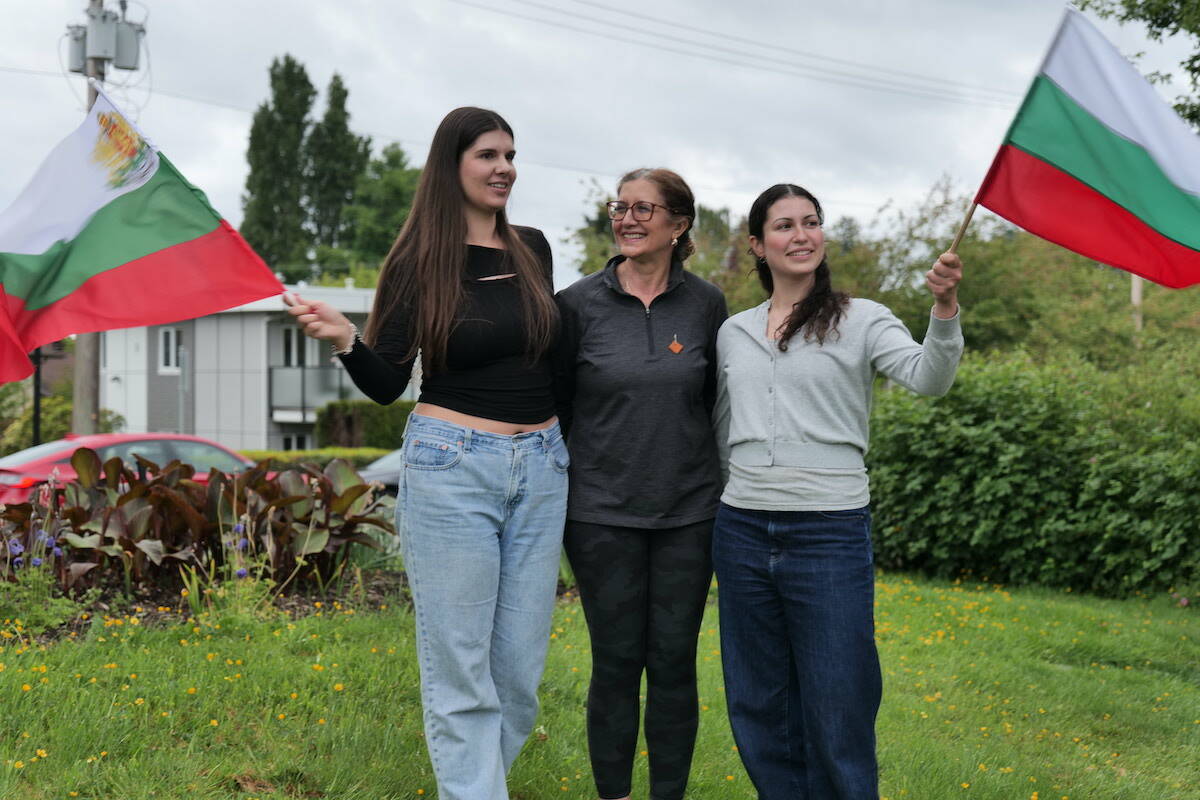
Elizabeth Tzatcheva, Theodora Borissov and Stephanie Borissov wave the Bulgarian flag with pride to celebrate the country’s Eurovision Song Contest win. (Ben Fenlon/Saanich News)
Eurovision rules prevent viewers from voting for their own country’s entry – a hurdle Bulgarians living in Canada were able to neatly sidestep.
But if the trio had been watching in Bulgaria, who would they have backed instead?
Well, their answers are unlikely to silence the long-running belief that Eurovision voting is driven as much by geography as good taste, with neighbouring nations famously accused of exchanging top points year after year – take a bow, Sweden and Norway.
All three pick high-energy Greece entry Ferto, performed by Akylas wearing a bold tiger-print outfit, complete with matching ears. His video game-inspired performance, blended with nods to Greek mythology, was a particular hit with Theodora.
“Also because they border Bulgaria,” admits Elizabeth. “They’re neighbours, so if it can’t be us, maybe why not our neighbours?”
While at first glance winning song Bangaranga might seem like pure modern Euro-pop, Theodora says both the performance and the song pay tribute to Bulgarian folklore.
From subtle costume details to the ‘breaking free from fear’ message of the song, she says the entry draws inspiration from the Kukeri, a centuries-old Bulgarian pagan tradition in which villagers dress as monsters wearing towering, hand-carved wooden masks and thick fur suits and bells – all to chase away bad spirits.
“She just really killed it,” says Theodora.
Fresh from attending a Bulgarian event in Richmond, Elizabeth says Bangaranga is fast becoming part of the country’s cultural fabric. One person dressed as a Kukeri monster even performed to Bangaranga. “It got everyone so excited,” she says.
As Bangaranga fever sweeps through the Bulgarian community, members of Sini Balkani have already floated the idea of incorporating the song into future performances.
Stephanie notes the group once performed to a folk-inspired Ed Sheeran remix, meaning anything is possible – especially as Bangaranga already features touches of traditional folk music.
However, standing in their way are the more cautious older members of the group who consider themselves “keepers of the traditions,” says Theodora.
“The Ed Sheeran mashup was a push,” adds Stephanie with a laugh.
Together for around 11 years, the roughly 15-member group meets regularly at Saanich’s Cedar Hill Recreation Centre. While Sini Balkani has taken part in the Victoria Day parade, GreekFest, and performed at events in Vancouver and Seattle, Stephanie says the group is just as much about community as it is dance.
“The Bulgarian community in Victoria is very small,” adds Elizabeth. “It’s a very close family-like community … everybody knows each other – I’ve known Stephanie since we were babies.”
For Theodora, having that connection is especially important for younger generations growing up in Canada.
“It’s great that our children can see other people like us and understand a little bit more about their culture and origin,” she says.
Stephanie and Elizabeth are already dreaming of taking in even more Bulgarian culture next year. As this year’s winners, Bulgaria will host Eurovision in 2027.
“How many times is this going to happen again?” said Elizabeth. “We have to go.”