In 1993, an investigation led by British Columbia’s chief coroner sounded the alarm after recording an “inordinately high number” of drug-related deaths, with 330 reported.
More than two decades later, on April 14, 2016, a provincewide public health emergency was declared following a sharp and unprecedented spike in overdose deaths, which reached 997 that year.
By 2023, the toll had climbed to a record 2,574 lives lost.
Today, on April 14, 2026, a decade after the emergency was declared, more than 18,000 people have died from B.C.’s lingering toxic drug crisis.
Under a cloudy sky and light rain, community leaders, advocates, scholars, activists, parents and friends gathered at the legislature in Victoria to mark the grim milestone, honour those lost and call for long-awaited change.
“Sadness, grief, and outrage is the theme today,” said event speaker Leslie McBain. “We are outraged that 10 years later this situation has not been treated as an emergency.”
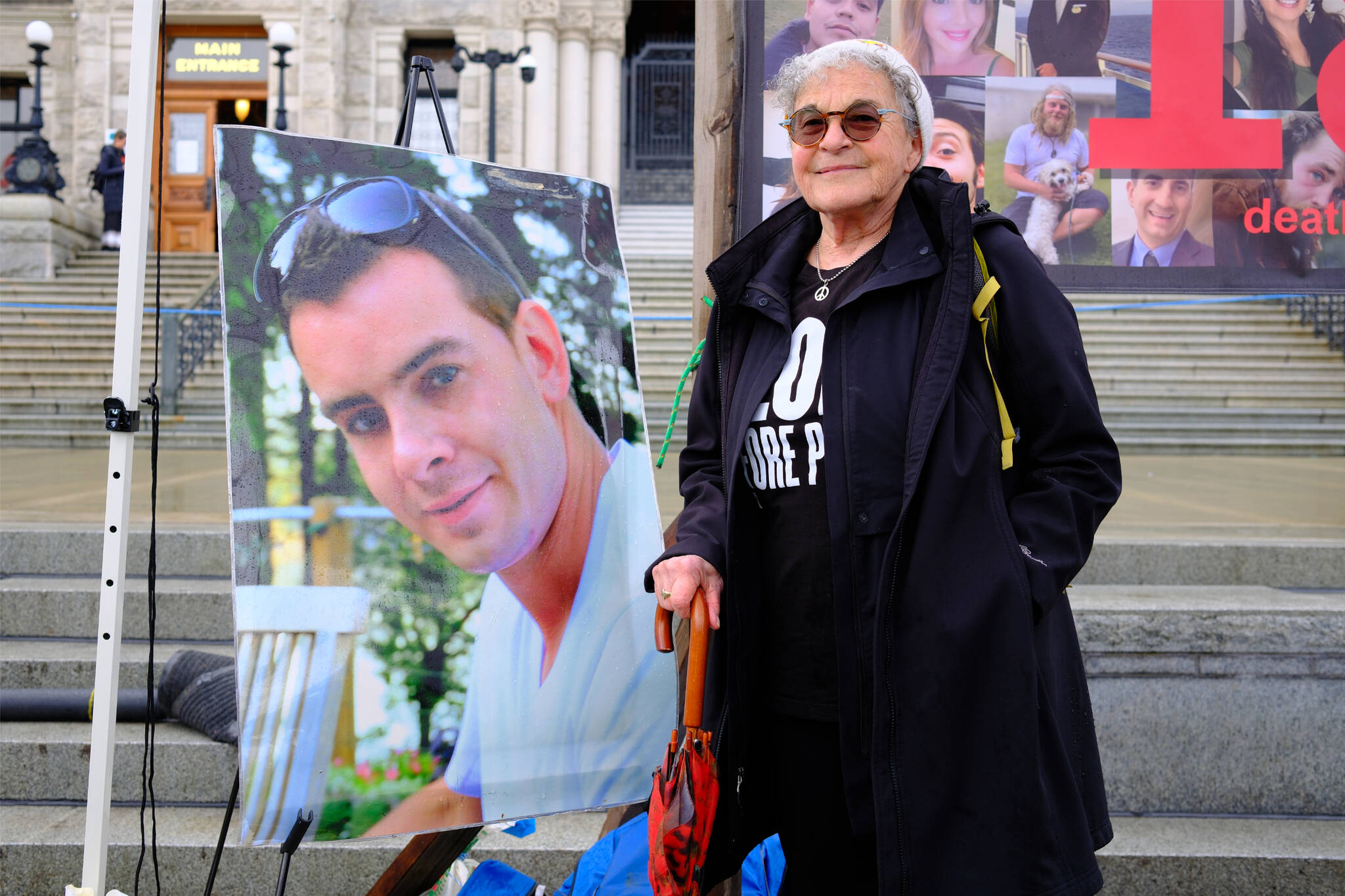
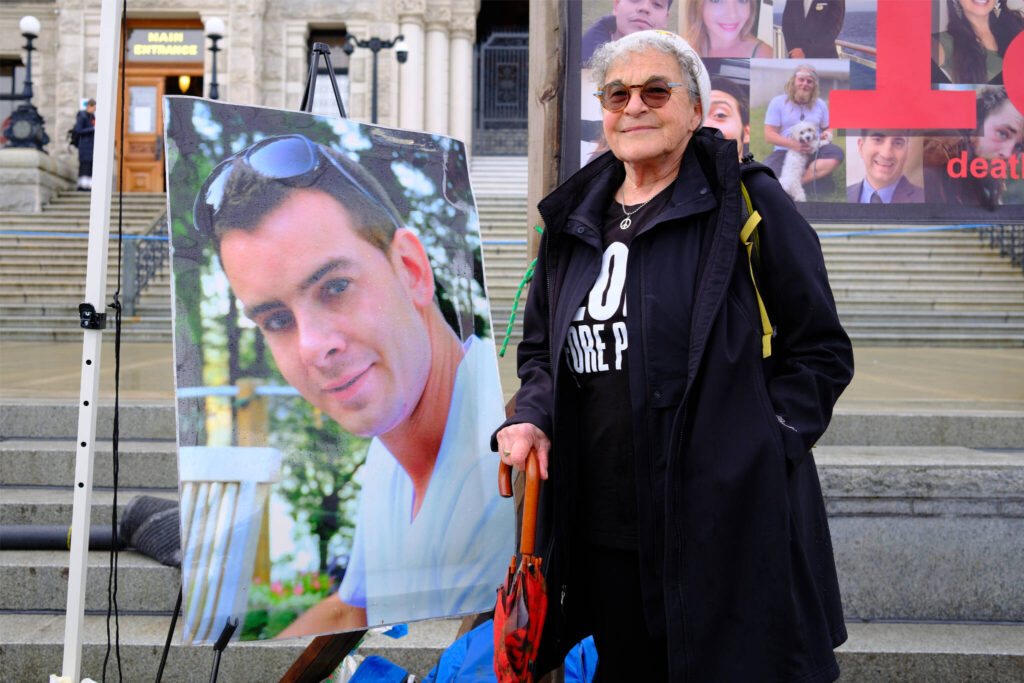
Leslie McBain, co-founder of Moms Stop the Harm, poses next to a picture of her son Jordan, who died in 2014 at age 25. (Olivier Laurin/Victoria News)
McBain, who co-founded Moms Stop the Harm, an organization dedicated to ending the toxic drug crisis, told Victoria News that working with the province over the years has been a challenge.
“It’s been 10 years of meetings, writing letters, talking to MPs and MLAs, especially here in B.C., to try and get people to understand that this crisis could be over,” she said, adding that safer supply and public education would be the driving force to end this plight.
Looking back on the past decade, McBain remains critical of the B.C. government, citing years of mostly fruitless work with the province, which she says has offered one “band-aid” solution after another.
“They’re talking, but nothing they’re doing is actually solving the problem,” she said. “It’s not politically advantageous for Premier Eby to say ‘Yes, let’s save the lives of people who use drugs.’
“But we can’t lose any more people. It’s unconscionable.”
Convinced that a willing government could solve the issue in a “heartbeat,” McBain said she will continue fighting for families who have lost loved ones and for her son Jordan, who died in 2014 at age 25.
“He didn’t want to die,” she said. “He was in detox and then he was good for a while, but he relapsed and it just went sideways.
“He could have done it, but we couldn’t find the support. We couldn’t find the things we knew he needed. I’m angry about that.”
Among the crowd of more than 100 attendees, Taija McLuckie was among several speakers invited to the event.
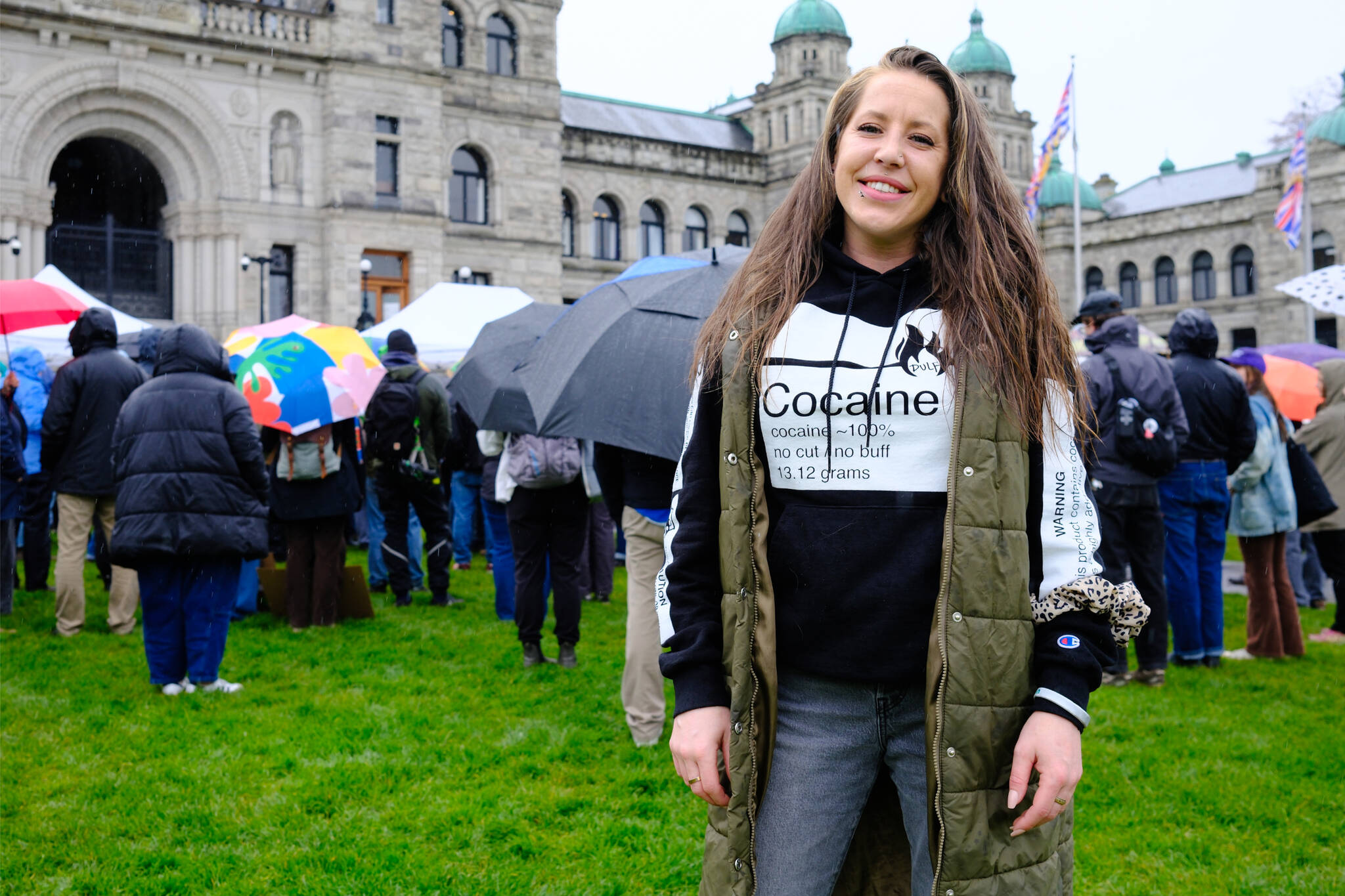
Comox Valley’s Taija McLuckie poses minutes before delivering a poem. (Olivier Laurin/Victoria News)
Preparing to deliver a poem detailing her anger and hope amid the current crisis, the street community advocate and researcher reflected on the meaning of the bleak anniversary.
“Those 10 years represent pain, grief, loss, excitement, accomplishments, and failures,” she said. “It’s just been like such a roller coaster.”
As a former frontline worker with lived experience who has lost countless friends to the toxic drug crisis, the Comox Valley resident said the sombre day carries undeniable weight but can also drive change.
“This day is a rude reminder, but I hope it’s an awakening for people to realize that we are not going to get anywhere if we continue to wait and rely on our government to make these big changes,” she said. “Nothing changes unless we collectively come together, regardless of where we are, left, right or centre.”
“We can make a difference as a community.”
Metres away from McLuckie was Victoria resident Pamela Vivian, holding a tribute to her brother Robin March, who died in 2020, at age 49.
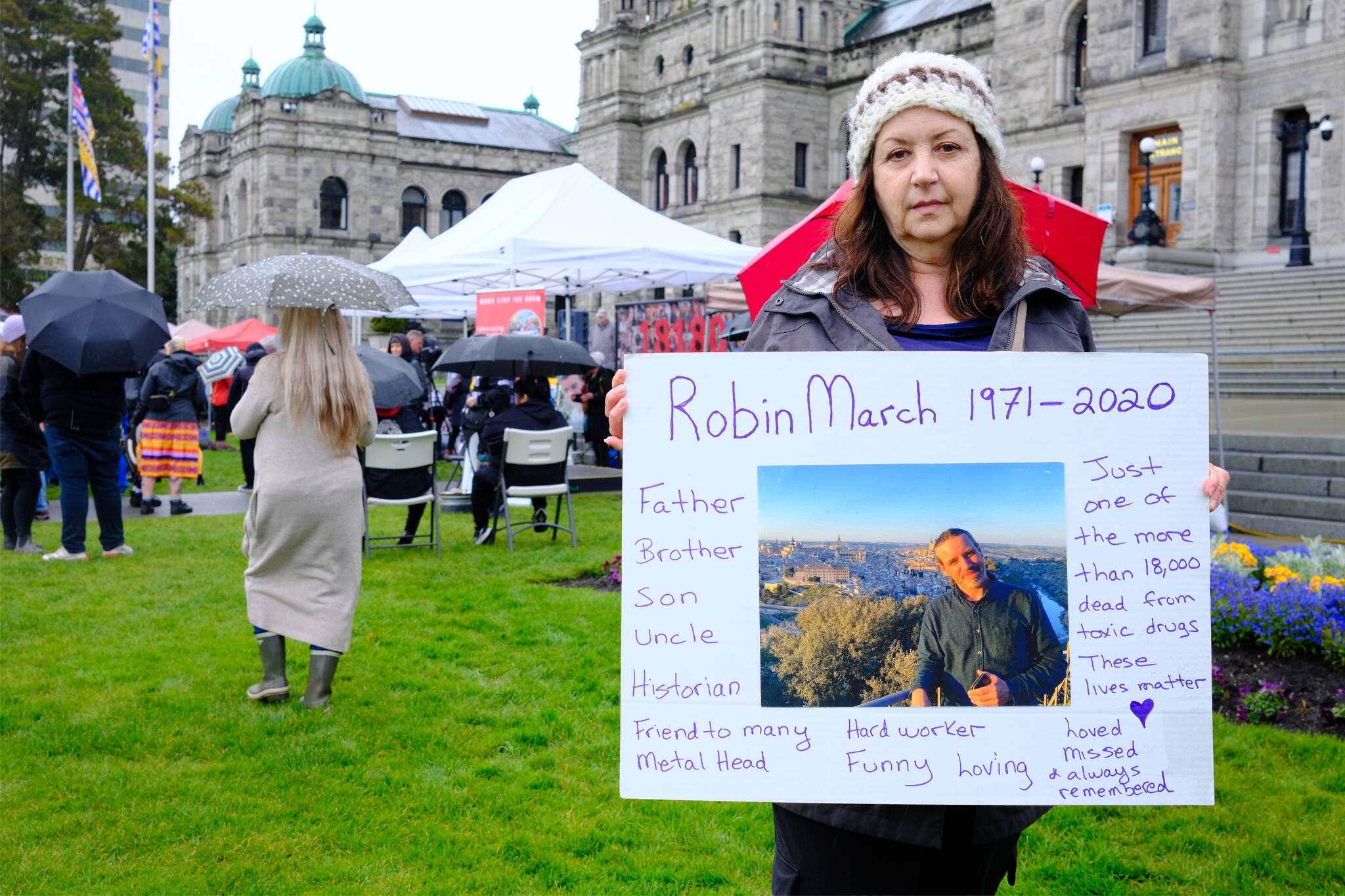
Pamela Vivian poses with a photo of her brother, Robin March, on April 14, 2026. (Olivier Laurin/Victoria News)
Vivian explained that, although it took her a few years, she recently decided to get more involved in the community by helping organize events that draw attention to the opioid crisis.
“It is so important to humanize this toxic drug crisis,” she said. “More than 18,000 people died of preventable deaths.”
Believing in the power of community, Vivian hoped the April 14 event would bring much-needed balm to families who are still grieving their losses.
“It represents a chance for everyone to get together, to express grief, to express rage, to demand action, and to stand in solidarity with those who have lost their loved ones,” she said.
Echoing similar remarks to McBain and McLuckie, Vivian said this day could serve as a catalyst for change and an opportunity to flip the script on an issue that remains widely misunderstood.
“People really stigmatize those who use drugs, but I don’t think they have the full picture of what this drug crisis is,” she said. “It’s affecting everyone, and it doesn’t matter who you are. This can happen to anyone.”