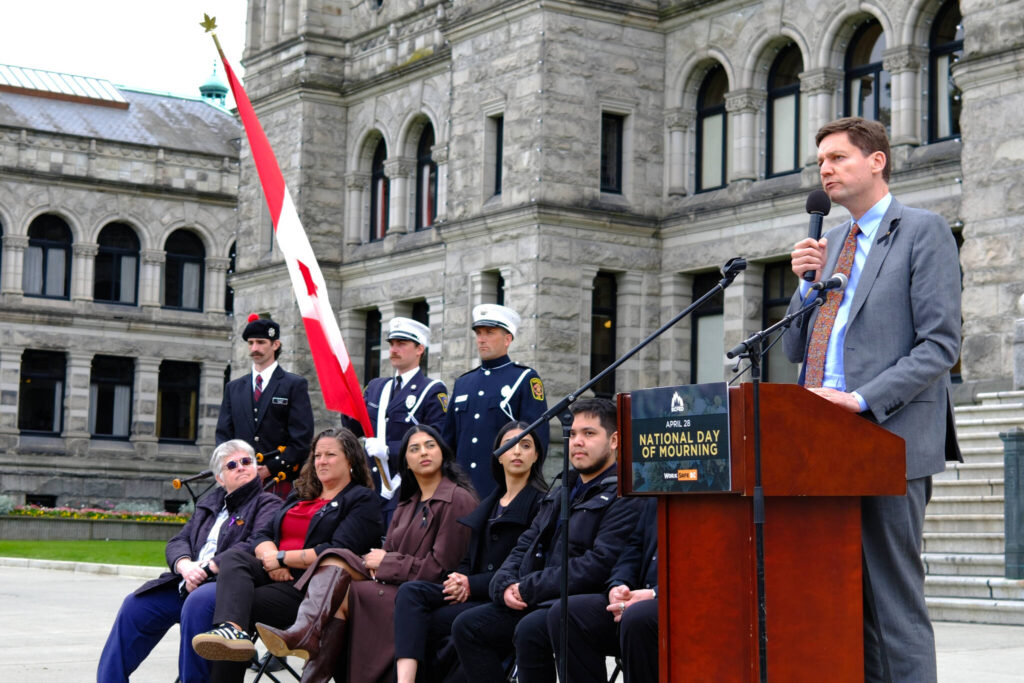
Wreaths, memorial ribbons, half-masted flags and a moment of silence marked a ceremony on the front lawn of the B.C. Legislature on April 28, honouring the 138 workers who died on the job last year.
The annual event, held for the National Day of Mourning, pays tribute to workers who have been killed, injured or made ill in the workplace and doubles as a time to renew calls for safer working conditions.
“These are the deaths that are preventable,” said Premier David Eby. “We are moving to ensure that every single worker is able to return home safely at the end of the day.”
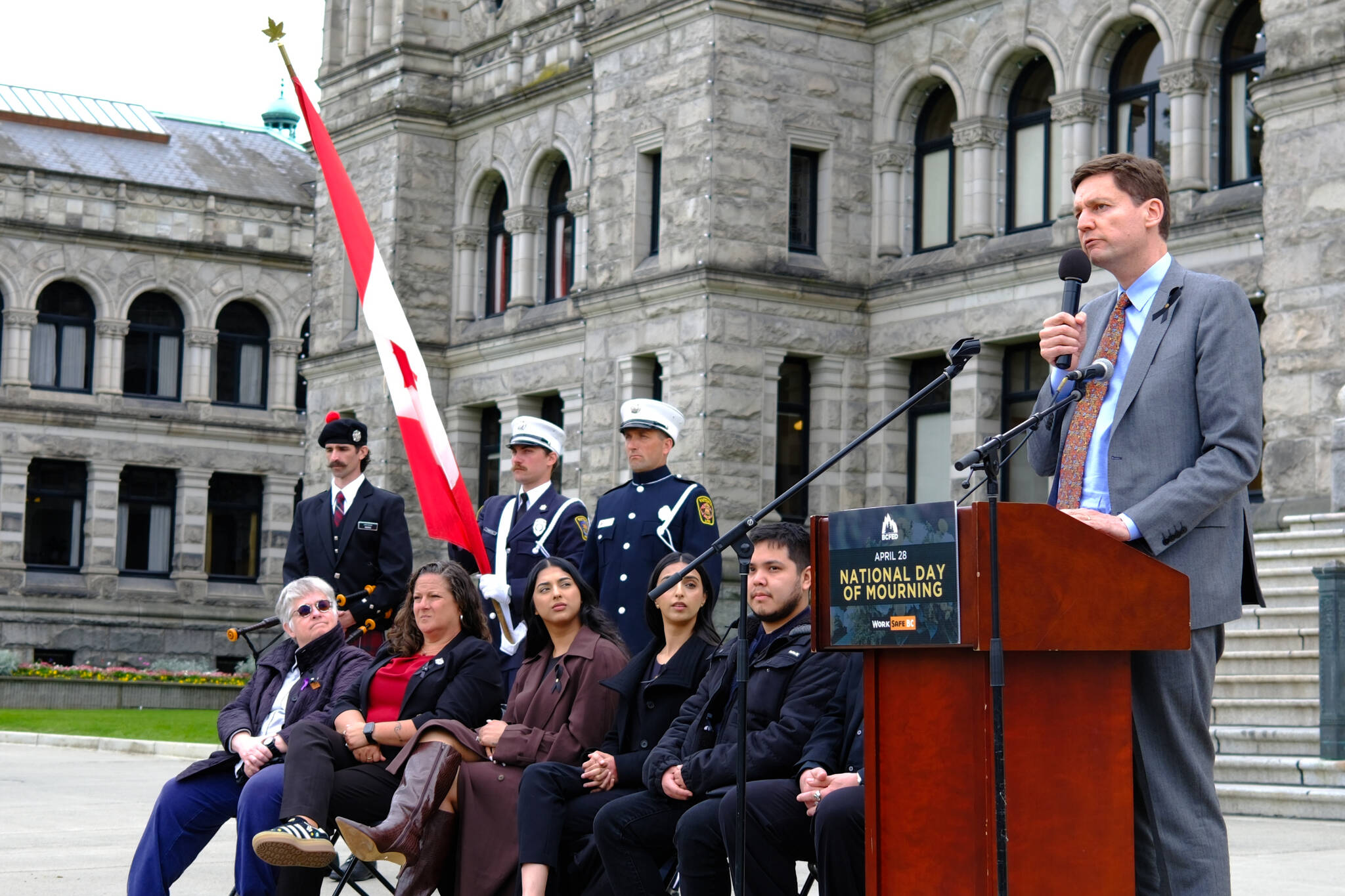
B.C. Premier David Eby addresses the crowd at the 2026 National Day of Mourning ceremony in Victoria on April 28. (Olivier Laurin/Victoria News)
In 2025, there were 138 work-related deaths recorded in B.C., down from 146 in 2024 and a recent peak of 181 in 2022.
According to WorkSafeBC, most of those who died were men, accounting for 134 deaths, compared with four women. Occupational disease was a leading factor, linked to 79 deaths, including 36 tied to asbestos exposure.
The highest number of fatalities happened among workers in construction, public administration and transportation.
Eight of these deaths occurred in the Capital Region, Victoria Mayor Marianne Alto told the crowd.
“That seems like a small number, but it is eight too many,” she said. “All of those lives were lost to all of us, and all of those deaths were preventable.”
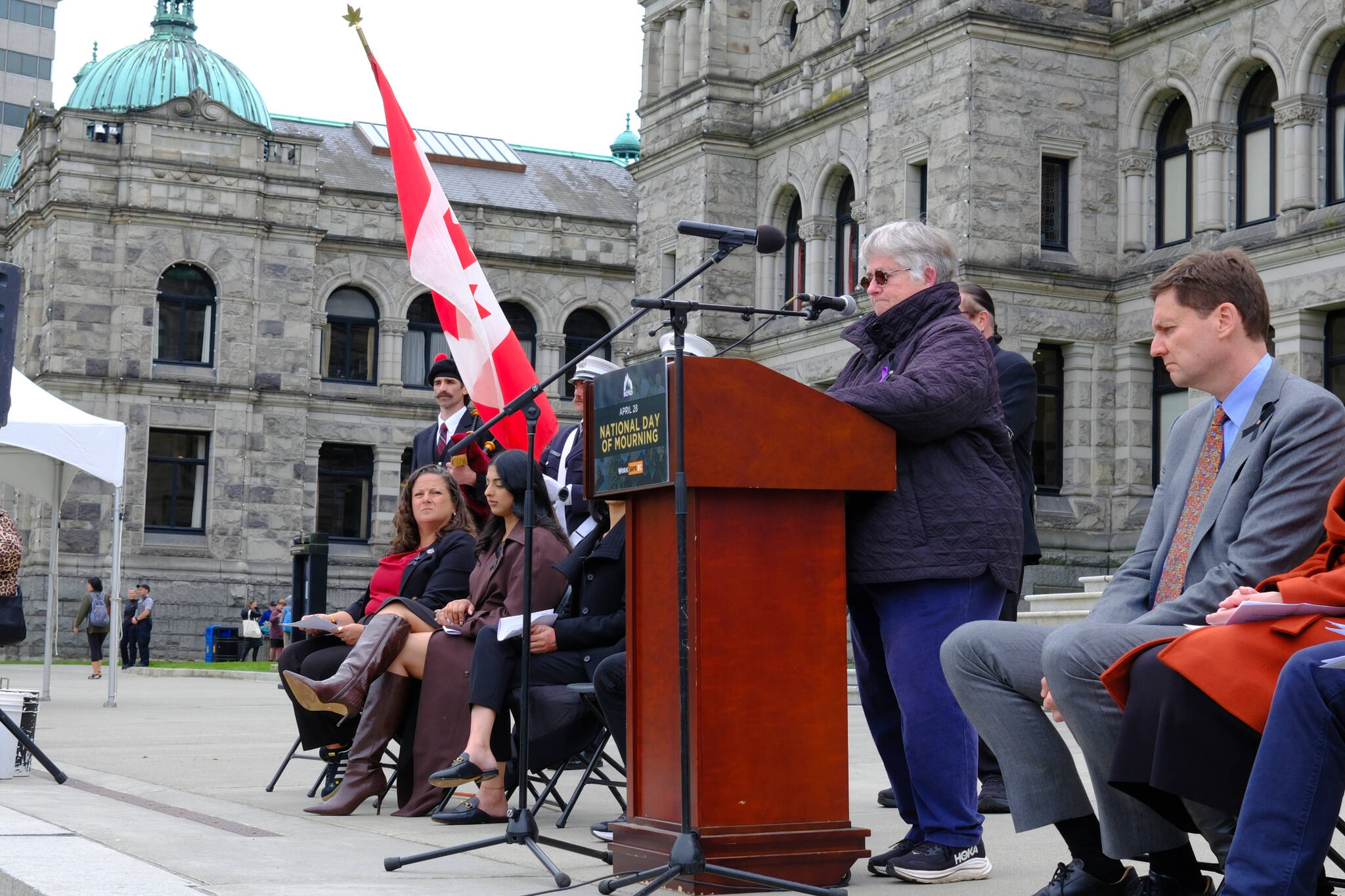
Victoria Mayor Marianne Alto addresses the crowd at the 2026 National Day of Mourning ceremony in Victoria on April 28. (Olivier Laurin/Victoria News)
Beyond remembrance, Alto said the day is also a call for continued advocacy for stronger working standards that “every worker deserves.”
“Collectively and individually, we have a duty to make sure that we have stronger standards,” she said. “We all need to continue to nurture, support and ensure that each one of us know that we have a right and an obligation to be part of the solutions. There should be no fear attached to being able to stand up and point out what’s wrong and what needs to be corrected.”
The National Day of Mourning was first recognized by the Canadian Labour Congress in 1984 and became an official national observance in 1991 with the passage of the Workers Mourning Day Act. Canada was the first country to formally recognize the day, which is now observed in over 100 countries worldwide.
Beyond honouring those who lost their lives, Labour Minister Jennifer Whiteside acknowledged the families affected, both at the event and across the province.
“The workers that we remember today were loved, they were valued, they were members of our communities, and they are deeply missed,” she said. “They deserve our commitment and our action to ensure that every worker in British Columbia comes home safe and sound at the end of their shift.”
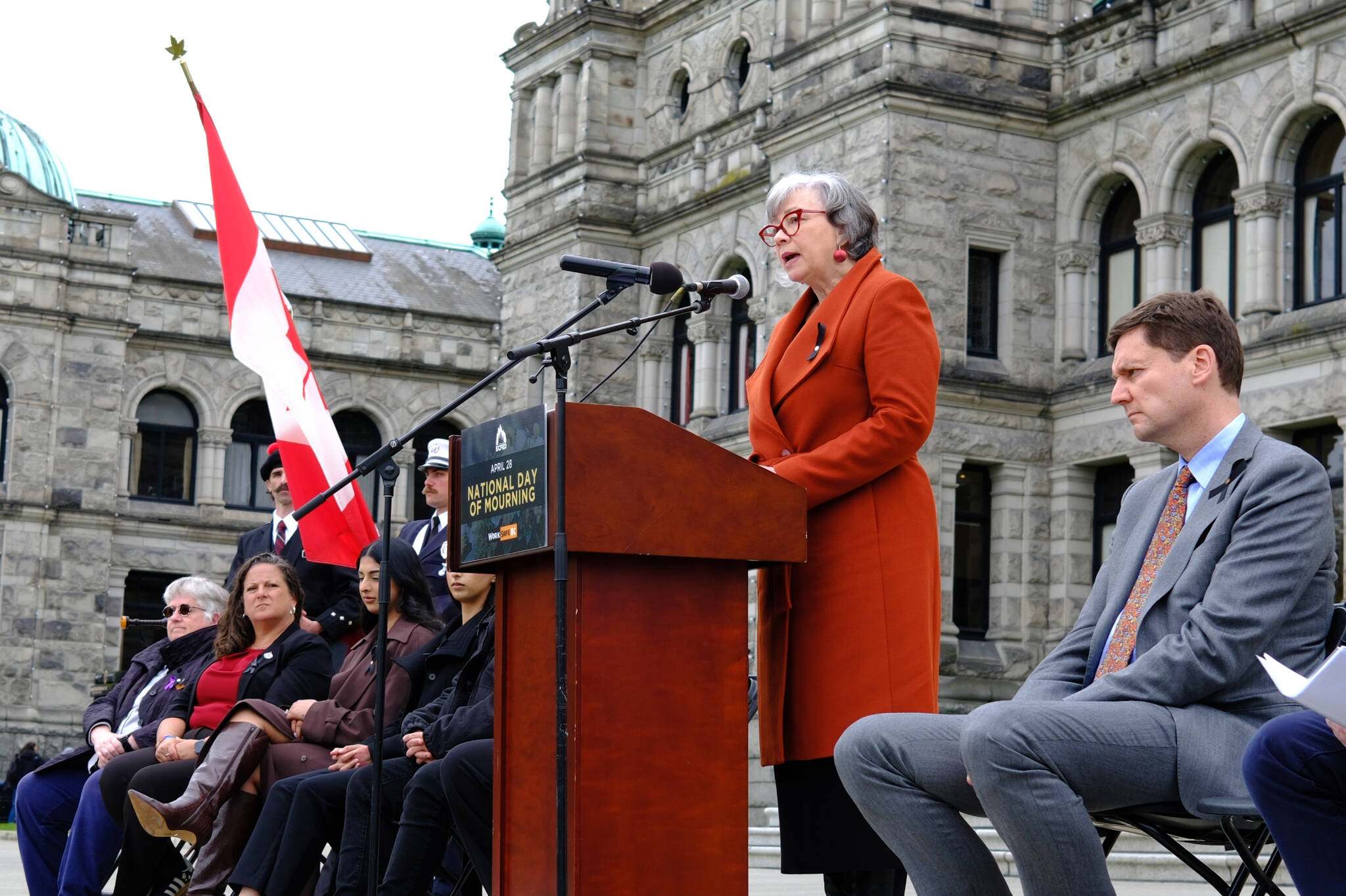
B.C. Labour Minister Jennifer Whiteside addresses the crowd at the 2026 National Day of Mourning ceremony in Victoria on April 28. (Olivier Laurin/Victoria News)
Whiteside also reiterated her commitment to “ensure that B.C. workplaces are the safest in Canada.”
Sussanne Skidmore, president of the BC Federation of Labour, recognized the work done in recent years to better protect workers, including crane safety work and expanded cancer coverage for firefighters.
However, Skidmore also used the day to draw attention to employers who put their workers’ well-being at risk in favour of profit and cost-saving measures.
While every death is a tragedy, she said they also carry a responsibility to push for change, to raise awareness, increase inspections, strengthen labour rules, bolster enforcement, levy penalties and prosecute crimes.
“Acknowledging that grief is deeply important, and feeling it collectively has tremendous power,” she said. “A power, I hope, to help heal… and a power that helps us move the changes we want to see.”