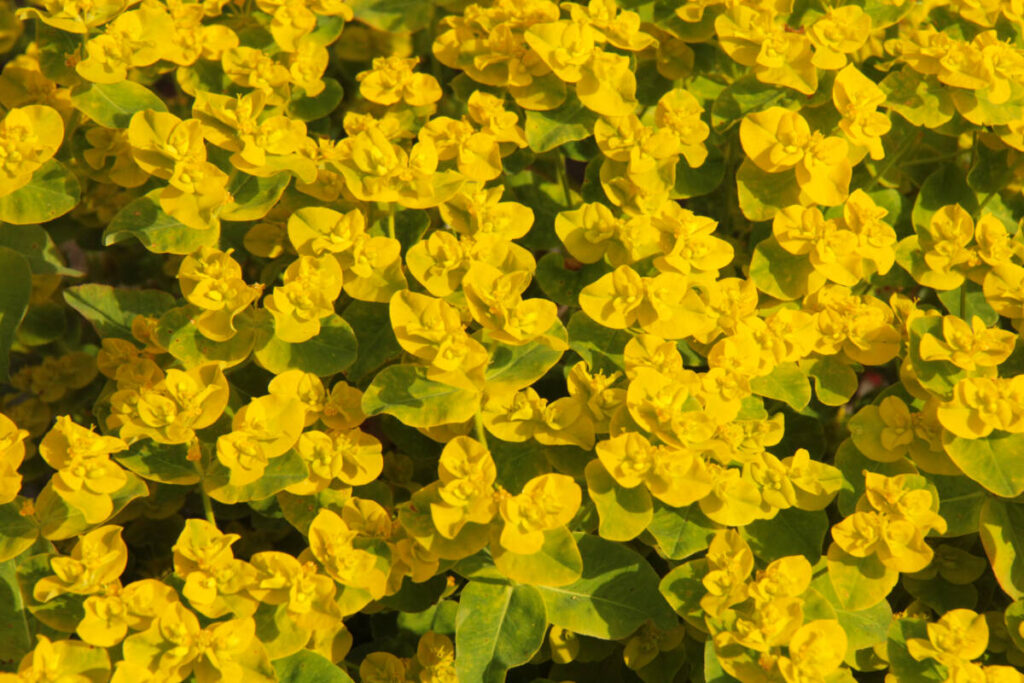
Bright yellow flowers bloom in bunches of five in a kaleidoscope pattern against lime-green leaf backdrop.
Eggleaf spurge, or Euphorbia oblongata, is pretty and dangerous.
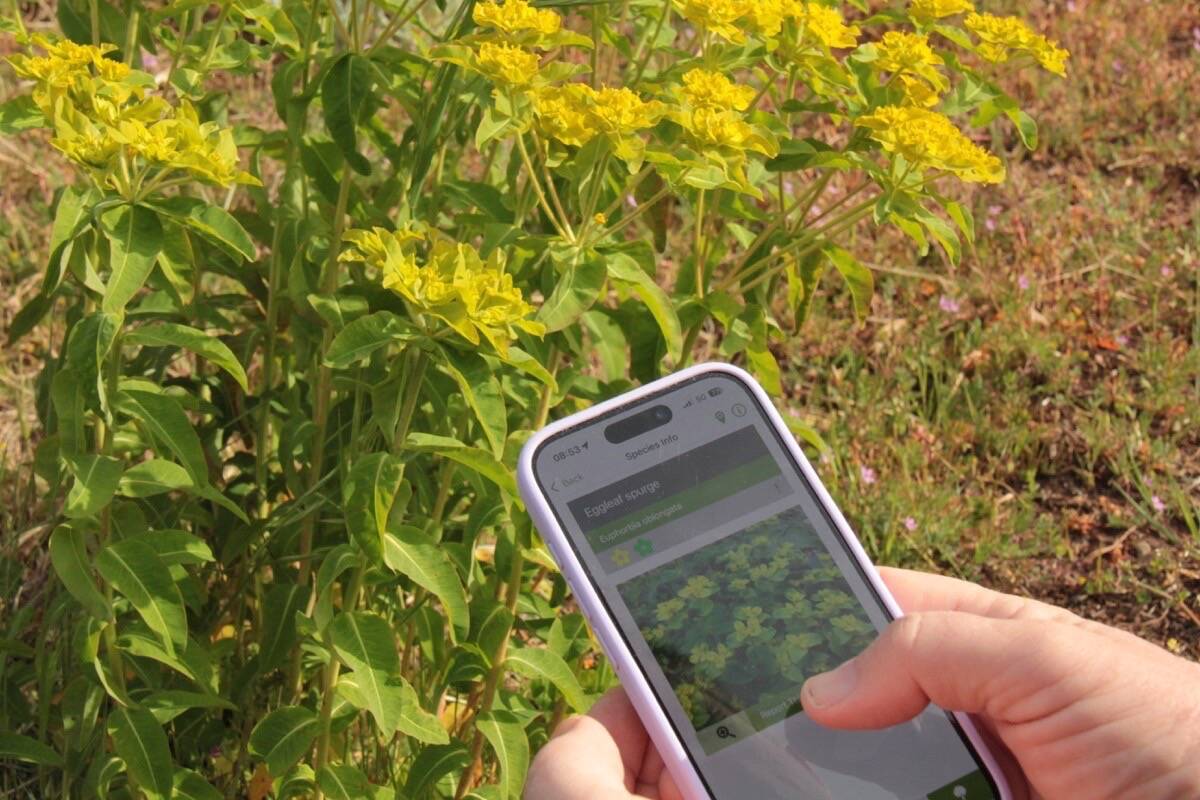
Wylie Thomas first detected it last year at about a dozen sites in south Oak Bay where he does a lot of ecological restoration work. This season it’s also been found along Hillside Avenue in Victoria. The high-priority invasive is listed under the provincial Early Detection and Rapid Response (EDRR) program. When occurrences are reported, the province will dispatch contractors to remove it.
“It is a highly invasive species that can rapidly dominate an area if left unmanaged. Improving early detection is critical to making that rapid response effective,” Thomas said. “Raising public awareness now would allow people to recognize and report new infestations before they expand.”
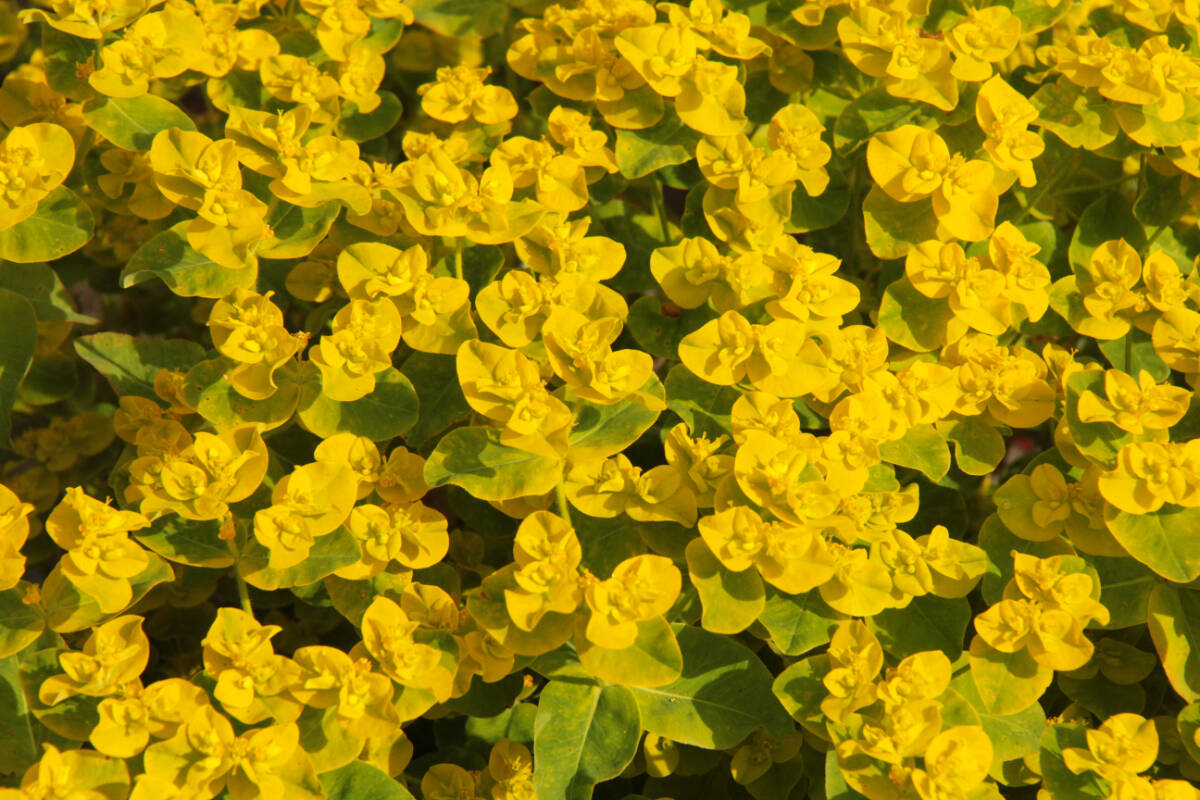
First discovered in 2022, there are 46 distinct populations known in the province, of those 34 are in Greater Victoria, covering 0.36 hectares.
“If it’s left unmanaged on someone’s property it will take over,” says Becky Brown, with the B.C. Ministry of Forests. Brown, an invasive plant specialist, is the provincial EDRR coordinator. “We will go in and we will do the treatment and there’s no cost.”
To make the EDRR list, it has to be deemed a true risk to the province that warrants that level of response and can be eradicated, Brown explains.
The risks are myriad.
While it looks innocuous, since it was first detected in B.C. in 2022, eggleaf spurge has seen a 430 per cent increase.
It thrives in dry to moist roadsides, grasslands, gardens, hillsides and open canopy areas and can form dense stands that outcompete native and desirable plants and is a particular danger to Greater Victoria’s Garry oak ecosystems, which boast the climate and soil the eggleaf spurge prefers, and a high density of rare and endangered native species.
The eggleaf spurge can also reduce wildlife habitat quality, including forage, as it’s not edible and has a milky sap that causes skin irritation.
The plant could reduce grazing opportunities not only for wildlife, but on agricultural land as well, as that same sap can irritate and poison livestock.
That milky sap in the stem also poses a risk to human health, as a toxin that can irritate the skin, eyes and digestive tract. It can also cause temporary blindness.
“I haven’t received reports of that in B.C. but it is well documented,” Brown said. “We’re managing all of the sites we know of regularly, but if one were to occur in a schoolyard or something like that we would probably fence the site off.”
There are currently no patches that large.
As suggested by its listing in the EDRR, the goal is eradication in B.C.
Once reported, the provincial team considers all the options for a site. In most cases they can dig the root out, but may apply herbicide in a bid to get ahead of it.
One plant can produce up to hundreds of seeds and that can remain viable in the soil for up to 12 years, Brown said. The plant also generates new stems and root buds at the root crown.
A critical component for full eradication comes down to education.
“We’ve got to make sure we identify and remove them before it’s a shiny geranium and it’s everywhere,” said Thomas, referencing a plant that was once on the EDRR. “The province only knows what people report. We have to do a better job of identifying it and being able to report it.”
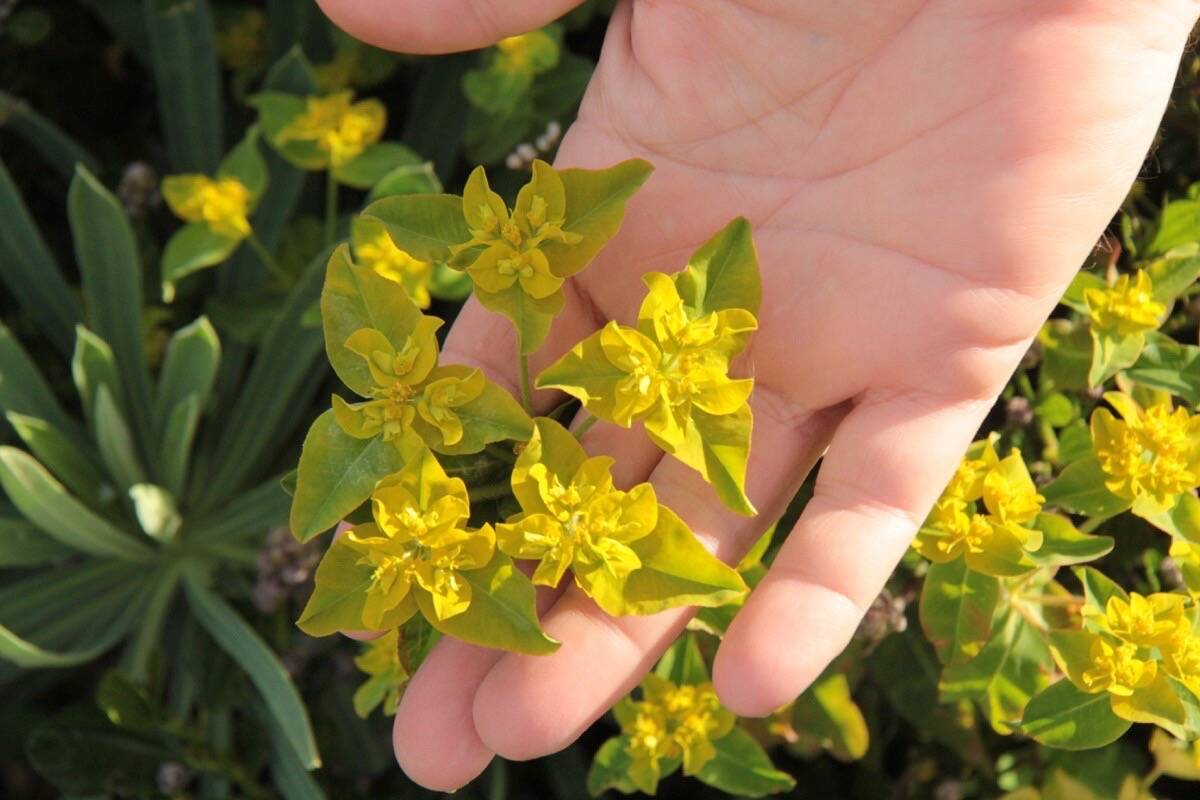
The perennial grows as tall as a metre with multiple stems from a woody branched root.
Flower clusters are yellow with a single female flower surrounded by small male flowers. Each cluster has yellow bracts at the base, then a whorl of yellowish green oblong leaves.
Its kaleidoscope look of flowers atop the stem differ from other Euphorbia in the region. In Oak Bay both grow side-by-side showcasing the differences.
Eggleaf spurge, or Euphorbia oblongata can be reported though a form online at www2.gov.bc.ca/gov/content/environment/plants-animals-ecosystems/invasive-species/reporting-invasive-species. The site also includes links to download the app Report Invasive BC, which Wylie highly recommends. The app makes reporting easy, once you know the plant to look up.