Forest Enhancement Society of BC (FESBC) has completed a decade of forest management work to reduce the risk of wildfires and decrease carbon emissions.
“There is much more work to be done, as there is a growing recognition that fire seasons are likely to become longer and more intense. Addressing or preparing for this reality requires a comprehensive and holistic landscape-level approach to forest management, one that balances multiple values while proactively managing forest fuel accumulation,” said Brian Watson, registered professional forester (RPF), operations manager with FESBC.
Watson added that prioritising forest management values that promote climate resilience when working at a large scale with limited resources will help maximize effectiveness.
FESBC has worked to create fuel breaks, which are long, wide, and continuous treatments in the forest or alongside existing linear features like roads or power transmission lines.
These fuel breaks can be “open or treed and are designed to modify fire behaviour and improve suppression opportunities by reducing the likelihood of high-intensity crown fires, or fires that spread from treetop to treetop and create conditions that promote lower intensity groundfires,” according to FESBC.
The treatment improves the efficiency of water and retardant drops, providing anchor points and conditions that are safe for wildfire crews to work in.
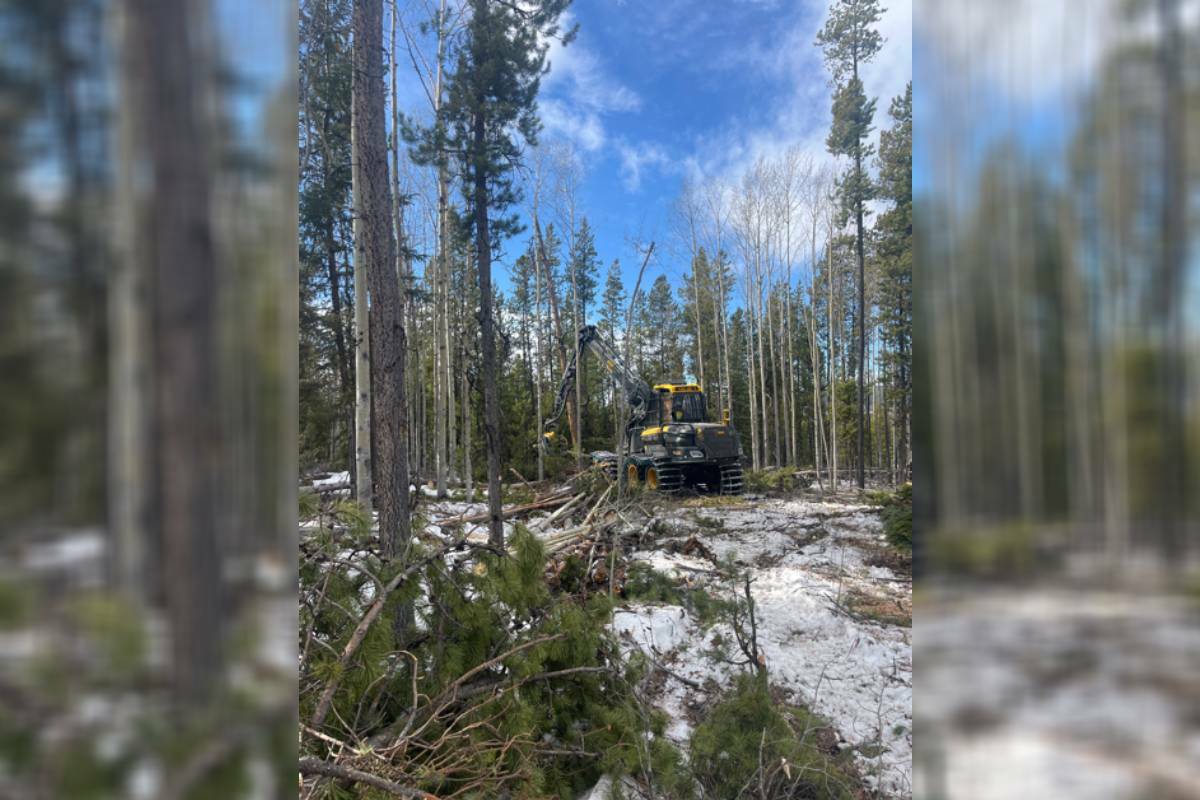
FESBC has also been supporting the implementation of fuel modification treatments, which means that forests are thinned, and branches and woody debris are removed to reduce the intensity of wildfires near homes and buildings.
“In all wildfire risk reduction treatments, thinning out the understory, or the layer closer to the ground, makes the application of fire and retardant on these stands more effective in limiting fire spread and intensity,” said Watson.
Fibre Utilization Program
Post-treatment debris is usually burnt to reduce the risk of fire. Through FESBC’s fibre utilization program, the organization has been transporting the low-value fibre to secondary facilities, reducing the carbon footprint of these projects and improving the air quality for workers and communities across B.C.
Under the fibre utilization program, FESBC shipped about 560,000 cubic metres of low-value fibre rather than open-burning it in 2025-26.
“This translates into approximately 11,200 truckloads of wood fibre to support secondary manufacturing facilities and approximately 180,000 tonnes of avoided greenhouse gas emissions.”
Watson said that the overall carbon released was significantly reduced, even if fossil fuels are used during transportation and carbon is released from the manufacturing process.
“Often, these investments are significantly lower than the social cost of carbon, a metric used by scientists and economists to measure the effectiveness of climate change policies,” he said.
Haida Gwaii
FESBC’s fibre utilization project created 24 jobs and avoided an estimated 70,000 tonnes of greenhouse emissions in Haida Gwaii.
Taan Forest Limited Partnership (Taan Forest), located on Haida Gwaii, is a subsidiary of Haida Enterprise Corporation (HaidaCo), wholly owned by the Council of the Haida Nation.
The size of slash piles created from harvesting operations was reduced over five years. Then, Taan Forest helped transport approximately 157,000 cubic metres of fibre to South Coast pulp mills rather than burning.
The transportation of almost 3,000 truckloads of fibre from the region to major markets also helped create 24 local jobs.
Jeff Mosher, RPF, chief forester, Taan Forest, said, “Instead of relying on traditional slash burning, we’ve been able to move significant volumes of low-value fibre to market, reducing greenhouse gas emissions while creating steady work here on Haida Gwaii.
Harrop-Procter Community Co-operative in West Kootenay
The Harrop- Procter community and province have been working with FESBC over the years, making a significant impact and demonstrating how forest management practices can adapt to a changing climate while reducing carbon emissions.
In the last three years, FESBC has partially funded transportation costs in the area for low-value fibre to the local pulp mill, avoiding it from being burnt.
This led to almost 8,533 cubic metres of pulp logs utilized. Approximately 4,000 tonnes of carbon emissions were reduced from this project, which is equal to taking 850 cars off the road for a year.
“With the support of FESBC, we’ve been able to link our climate adaptation and wildfire risk reduction work to a real reduction in carbon emissions, diverting material from slash burning and instead putting it to productive use,” said Erik Leslie, RPF, forest manager of the HPCC.
Nazko community in Cariboo
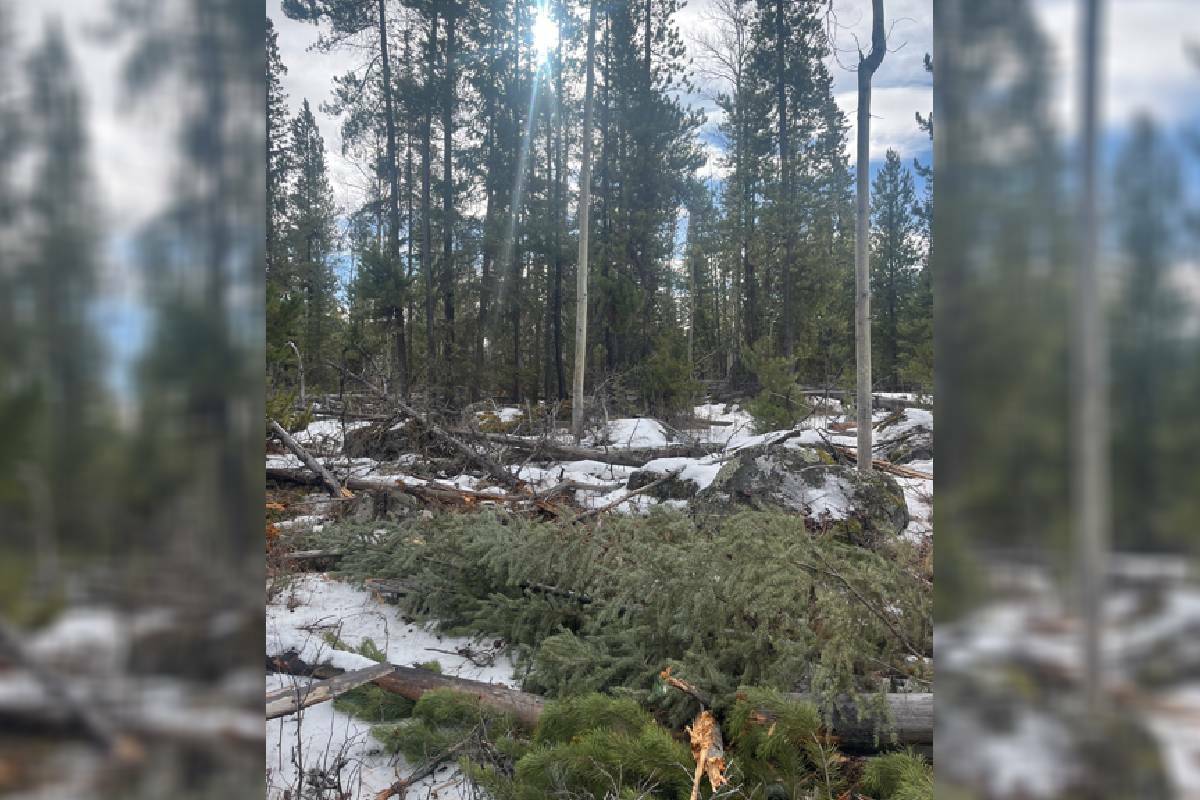
The Nazko First Nation led the rehabilitation of a pine forest near Nazko, which was heavily impacted by the mountain pine beetle. Partnering with FESBC, it removed dead and fallen trees from the forest floor and moved them to the roadside, which was then transported to local manufacturing facilities.
A small amount of fibre that could not have been utilized was subsequently burnt, but the overall burning was needed to decrease the fire hazard.
This work was especially important for the community of Nazko, which has been evacuated numerous times over the last 15 years due to catastrophic wildfires.
“Projects like this one have a real and lasting impact in our community, helping us take meaningful steps toward reducing wildfire risk and better protecting our forests. This investment is an important part of building a safer, more resilient future for our community while also paving the way for more Indigenous-led forestry in B.C.,” said Florian Bergoin, natural resources manager with the Nazko First Nation.
In addition to reducing wildfire risk, the treatment helped address food security strategies by improving habitat for species like moose, grouse, and deer and improving conditions for berry production. The treated area also enhanced cultural and recreational opportunities.
“As we mark ten years of FESBC, what stands out the most is the tangible impact these projects are having on the ground, the people behind the work, and the role they play in addressing climate change,” said Jason Fisher, RPF, Executive Director, FESBC. “Climate change is one of the defining challenges the forestry industry is facing, and the projects highlighted here demonstrate that practical, scalable solutions exist. Whether it’s reducing emissions through fibre utilization or strengthening forests to better withstand wildfires, this work is delivering real results across the province. It shows that with the right partnerships and targeted support, we can take meaningful action that will benefit future generations.”