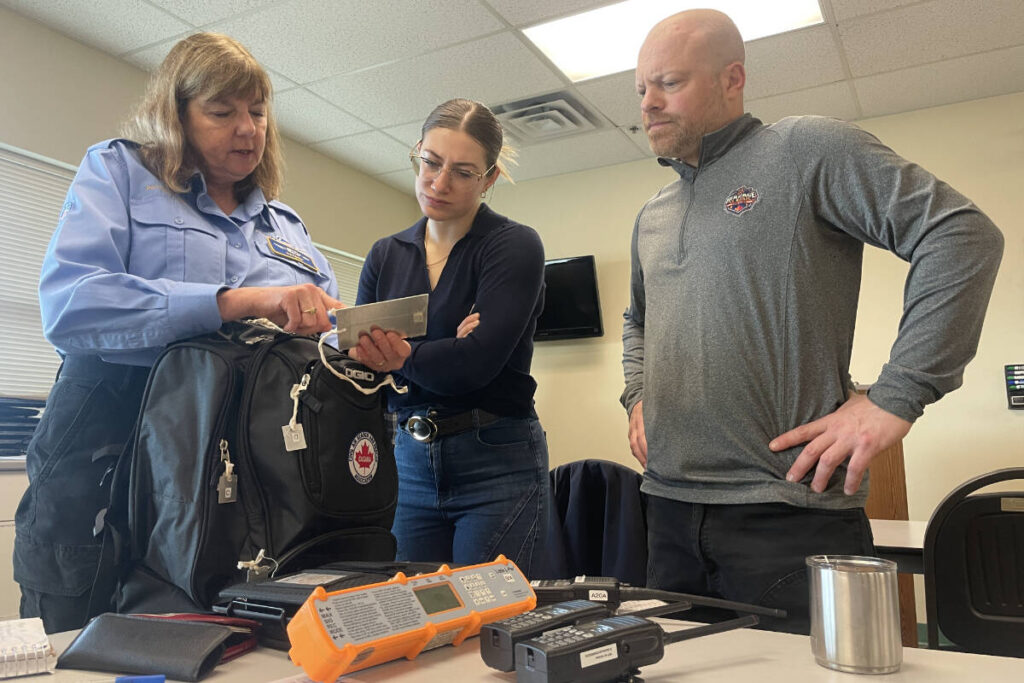
On the rocky shore of a North Saanich beach, a sound pings from the portable direction finder in Vanessa Waugh’s hands as she carefully turns her body, determined to find the strongest signal.
The equipment can track the strength and direction of AM and FM signals, but here on the beach, the emergency location transponder signal she’s looking for seems to be bouncing off the water or across the bay.
Waugh is part of a four-member team out searching for the signal sent out by the ELT, which could indicate a missing hiker, downed aircraft or other person in distress.
Today it’s a drill.
With shaky weather limiting flight options for the training day in the Jordan River search area, four teams with Victoria’s arm of the Civil Air Search and Rescue Association went out on ground searches instead.
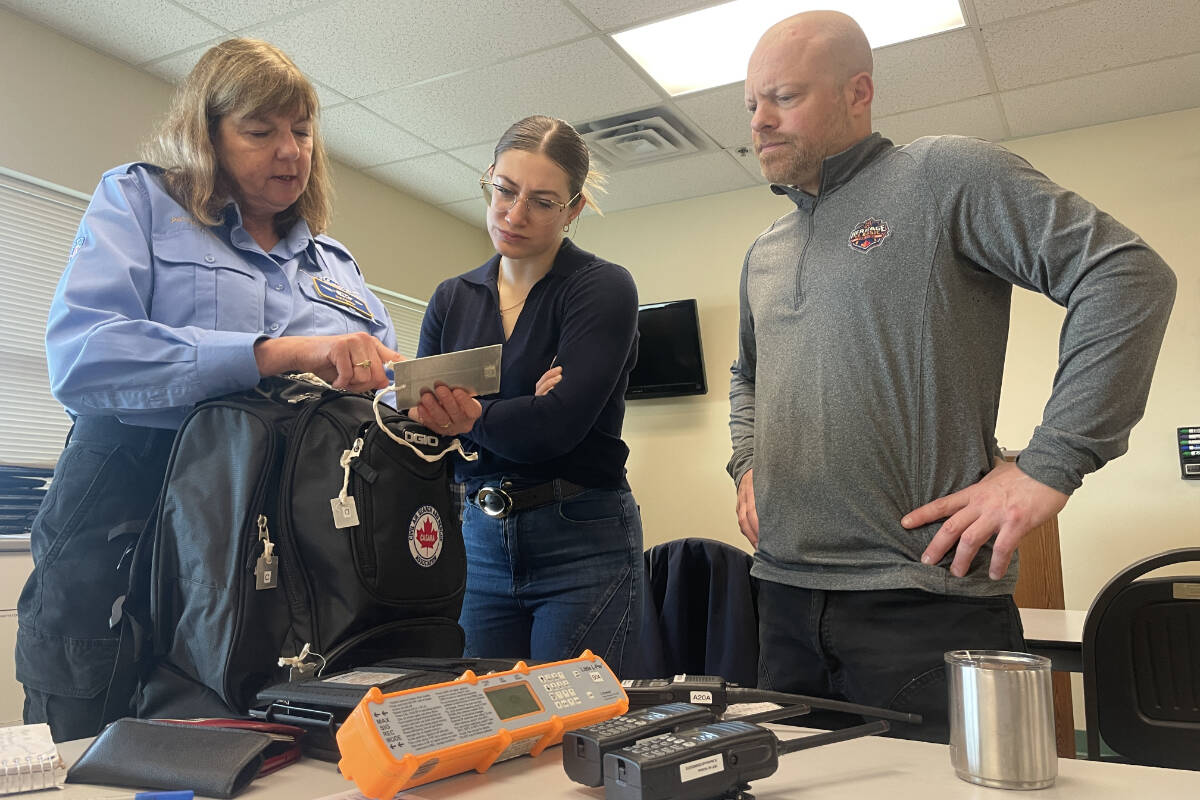
“We fly in more marginal weather than the average pilot would, out of necessity,” said Robert Northcott, the area air deputy, and the guy in charge of keeping the Victoria crew’s credentials in order. But team safety remains top priority.
“When the weather’s bad, we sit in a classroom or go out in a car.”
Every second Saturday, they’re doing something to maintain currencies for the spotters, navigators and pilots. Victoria is one of three Island zones covered by CASARA, with 35 members based out of the Vancouver Island Helicopters complex at Victoria International Airport, another 35 based in Nanaimo and 12 in Port McNeill. CASARA is national, but every province has its own oversight group – in B.C. that’s PEP Air, which was the first of its kind in the country.
RELATED: 17 names: Search and rescue to honour their fallen in Victoria
RELATED: Return of the dog: Metchosin SAR’s latest member has a nose for the job
Across B.C., 412 volunteers pumped 27,284 hours into training for the 4,377 hours spent on “task” in 2025. Add in more than 9,000 hours of meetings and 10,000 hours of administration and the group en masse committed 41,273 hours to the organization last year.
Funded through the Department of National Defence, the primary goal of CASARA is to assist the Forces for aircraft and vessel searches.
“We also make ourselves available for what’s called humanitarian searches,” said Keith Bjorndahl, provincial deputy director.
That can include things like missing people.
With Michael Steenvoorden at the wheel and Trish Krol navigating, the team takes 90 minutes to find the ELT – hidden in the bushes at the public beach access across the bay from where Waugh tracked that first strong signal.
RELATED: ‘Hazardous’ search among reasons for myriad Oak Bay Sea Rescue awards
RELATED: Juan de Fuca SAR lead earns B.C. medal for heart, vision and resilience
The search would be similar from the air, with radio homing beacons seeking transmitters from the sky. Other searches include spotters, looking for anomalies on the terrain below. CASARA also has arms-length relationships with local volunteer ground and marine search and rescue organizations. Despite no official relationship, communication and connection are important, and they do occasional training together, Bjorndahl said.
Mutual training might look like a local search and rescue organization on exercise – say a group of green boats on the water – at the same time as the local CASARA group is in the air, seeing if they can spot that activity.
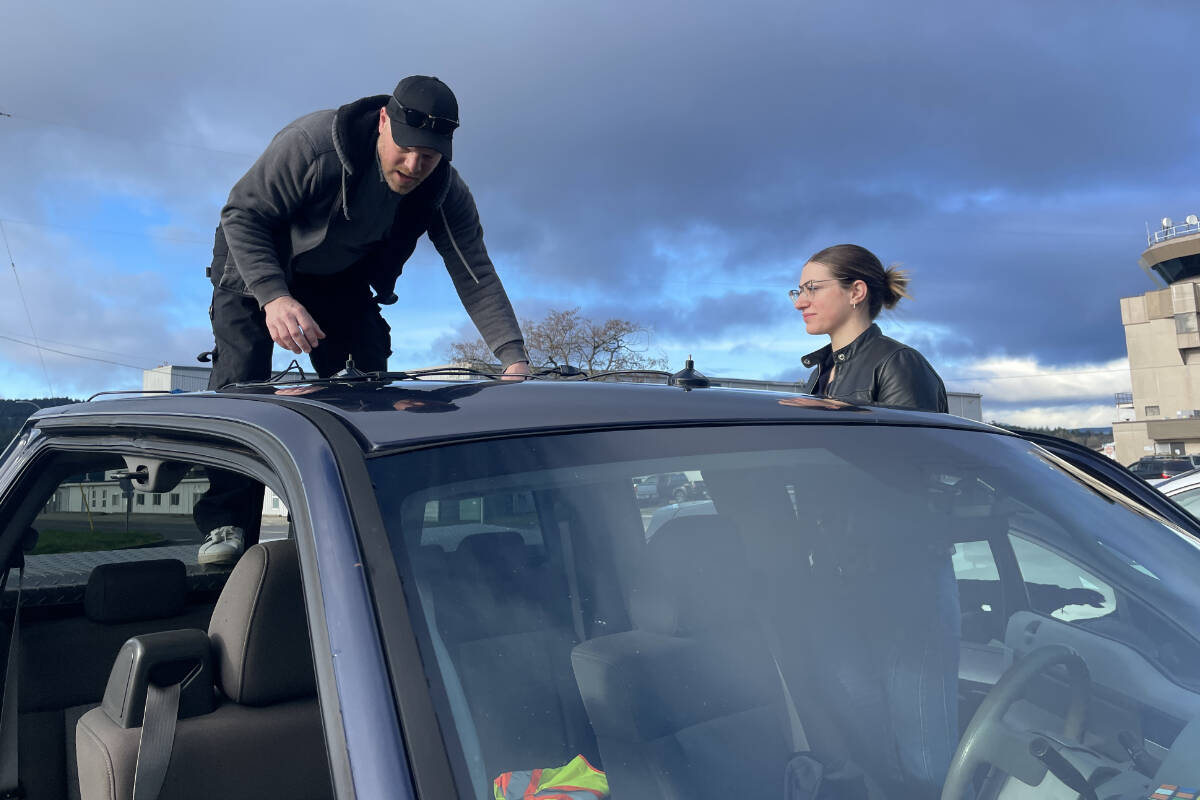
Saving lives is the goal – “that others may live” is the motto and how Krol signs her email. That can include locating and turning off errant ELT signals, clearing the air for true emergencies. The team has located signals outside wrecking yards, magically disappearing as some vehicle is crushed beyond recognition; that one was part of a highly unusual three-ELT day, Northcott recalled. The other two were located as well, one with a dead battery, while the other turned out to be simply switched on instead of off by a pilot upon landing.
Among the more interesting was a 2022 trip over the border to Lopez Island, where an ELT was going off, and no one was available locally. After ensuring it would be OK to land on American soil and return, they got the go-ahead from JRCC, which tasks the teams. It was an adventure, recalls Krol, who was on the team, and turned out to be groundbreaking – the first time Canadians went to the U.S. to home an ELT.
Another time, on a search for an aircraft – which sadly remains a mystery – searchers discovered another small private plane wreckage from 1964.
“It provided closure to the family,” Northcott said.
Tasking, usually through the federal Joint Rescue Coordination Centre, can come at any time. Then Northcott confirms who’s available before the team can accept the task. Last fall, they did a full week of work in Bella Bella – in and out on a massive search for a missing Heiltsuk Nation Elder.
Coming together to support that remote coastal community highlighted the team nature of the work by volunteers across B.C.
The search triggered mutual aid responses from CASARA and ground search and rescue teams from across Vancouver Island and the Lower Mainland. CASARA pilots moved searchers, personnel, equipment and the occasional dog in and out of the region.
Despite the SAR efforts, the community search continues for that man.
“You train like crazy and hope you never need it,” Northcott said. “You feel like it’s winning the lottery when you get to help someone.”
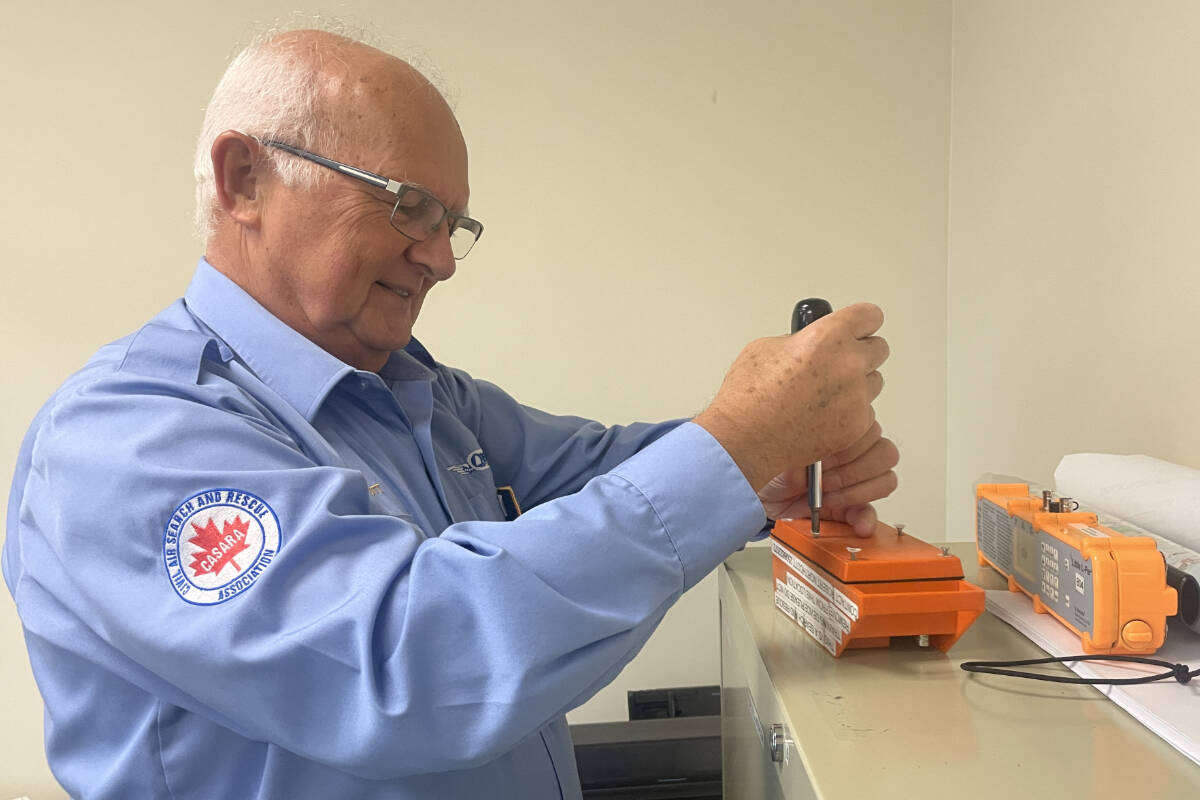
Beacons make searches easier, and he’d be OK with becoming obsolete – though an unlikely outcome given human nature.
“There’s fewer searches because the tech is better,” Northcott said.
Upgrades in recent years include the introduction of drones.
“That’s a newer area for us, but it still involved flying and air regulations that we’re familiar with,” said Bjorndahl, who is also a pilot.
While the small fixed-wing aircraft can fly low and slow, it’s not low enough to make use of the tech that drones can – specifically, a software that can pick out a speck of specific colour from a mountainside image.
There’s also a new pilot program called Sailor Airborne Sensor, a form of mobile cell tower useful when a phone is completely out of cell tower range, on, and with power.
The Victoria-area crew is keen, able and grounded in a great way, Northcott said. Most volunteer out of a desire to contribute to the community, marrying it with their affinity for aviation.
“We have fun doing our training. If you’re having fun, you learn better. But there’s always that seriousness, knowing somebody’s life could be on the line,” he said. “It’s interesting, and I love doing this. It’s because of the membership, the group. There’s a good camaraderie, a good fellowship.”