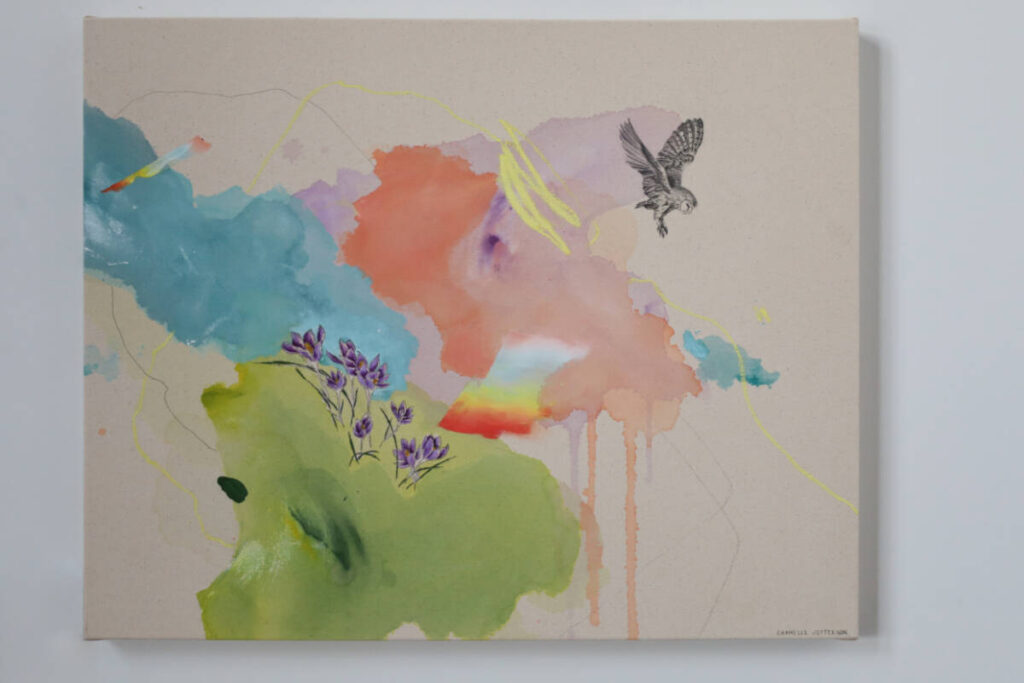
Grief could be comparable to a rainbow. It comes in a storm, or out of blue sky.
Sometimes it’s there without being seen, and other times blooms in bright hues.
The colours arcing overhead are a happy reminder for the late Lexi Townsin’s family.
When rainbows fill the skies over Victoria, dad Troy Townsin sees Lexi and her love encompassing all who can see it.
The Esquimalt family resonates with reminders of Lexi, who lived with Blau Syndrome, and died of complications in 2019 at the age of 6.
The rainbows are personal, and so are the myriad other ways they maintain her legacy, with a foundation, fighting for others facing rare diseases, and focusing on youth doing good for the world.
Troy still maintains a social media account, now older than the little girl in the images, that he and Lexi created.
“Lexi and I started it at the time because we were looking for help for a rare disease, and hopefully find a cure. That’s why we started it, but we built a community,” Troy says. “I hear a lot of good feedback about it. I get a lot out of it. I get something out of it that feels positive, it would be a waste to lose it.”
It’s where Troy discovered The Grief Project – which challenges the old idea that people should get closure and move on.
“Everyone’s going to experience grief at some point in their life. You don’t have to get closure and move on, you can keep those people with you every day,” Troy says. “I think that’s a healthy thing to do.”
Grief ebbs and flows, morphs, and stretches across generations, and people deal with it in a variety of ways.
A Nova Scotia artist puts paint to those emotions, calling on people to submit their stories.
Chanelle Jefferson transforms personal experiences of loss and grief into original paintings with the intention to help support, open dialogue and change the way society holds space for any form of loss.
A full-time artist for the last five years, Jefferson found she wasn’t always equipped for the conversations people pursued and became a counsellor “just to learn how to have better conversations and hold space for people who were viewing my work.”
Her heartfelt work comes from a childhood in an abusive home in rural Nova Scotia.
When she was 12, her dad went to jail, and though it wasn’t the Norman Rockwell of relationships, he was her dad.
“At the time, I didn’t know what I was experiencing was grief,” she said.
Anger settled in for many years, finally finding some release with the art.
“I also lost a friend a few years ago, who, when I lost her, I made a painting about her and losing her,” Jefferson explains.
The final piece of The Grief Project origin story came after a close friend lost their sister and asked Jefferson to sit in her garden and draw.
“They just let me be in the space she tended to and cared for so much,” Jefferson recalls. She realized painting in nature was healing for that family, bringing a piece of their loved one to life.
In that moment, she had an epiphany of that healing as universal. “I had the opportunity to see how everybody connects to nature in some way.”
She put out a call on social media, inviting stories of loss, and within two weeks had 250 submissions from people willing to share their most vulnerable stories and moments.
“The part that has really made things a little less painful is to realize how much beauty still exists even when someone isn’t here and how much we are still connected to them,” she says. Plus, putting all that beauty and pain on canvas is fulfilling, even if difficult.
The artist taking people’s heartfelt memories, providing them an opportunity to articulate and express their journey, is therapeutic in itself. The creation of something concrete is a gift, says Marney Thompson, director of bereavement services for Victoria Hospice.
“I’m just really grateful for the work that she’s doing,” Thompson says.
Grieving is an adjustment. Learning to live with loss and discovering and creating ways to continue to feel connection. Even when someone dies, the relationship with them doesn’t.
“We come from a culture where there’s a fix or solution for everything. I think that drives the belief that grief is a thing that we get over. And for those experiencing loss, we really want it to get better, we want to fix it and we want it to end,” Thompson says.
There are memorial benches, trees, runs, hockey tournaments, foundations. Stars are named for those gone, ashes scattered in beloved places, skin inked in honour and even jewelry featuring DNA. Humans find a way to honour loss in a bid to move on.
“It helps for people to put out in a tangible way that even though someone has died, our connection to them, our valuing of them, and the legacy that person has left in our life doesn’t end,” Thompson said.
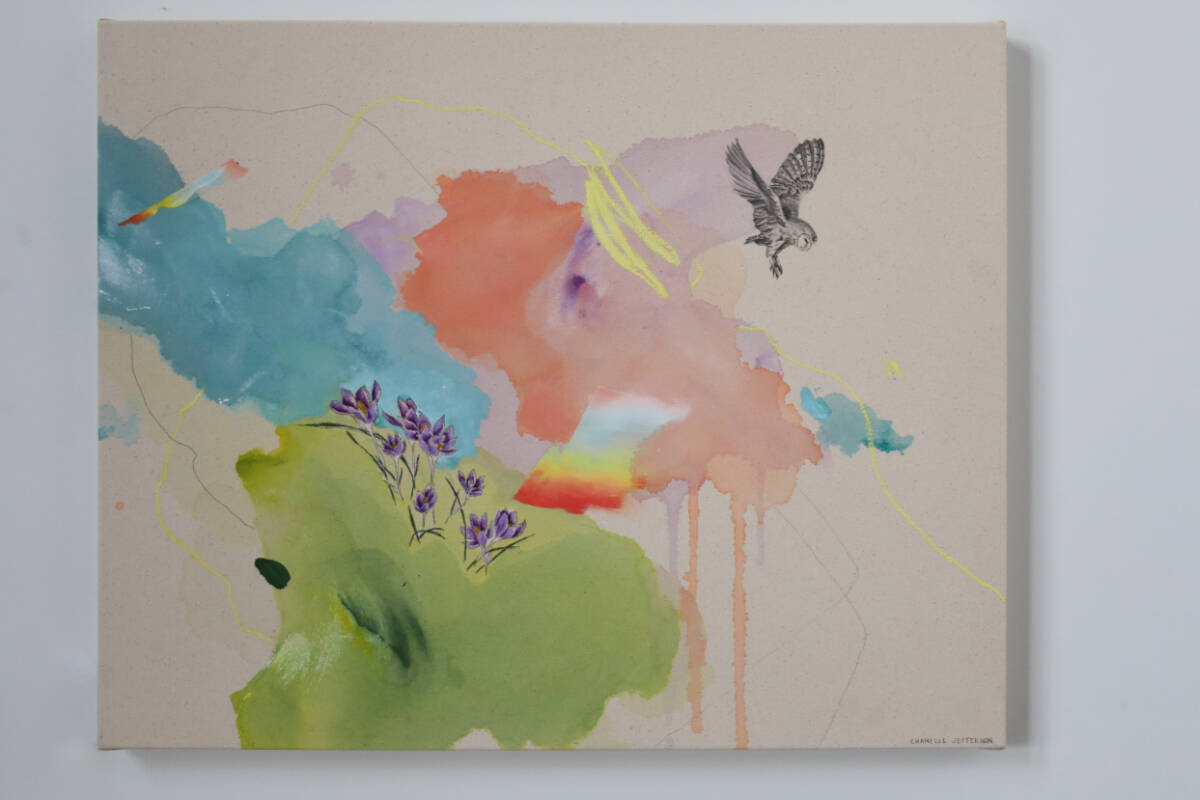
Now two years into The Grief Project, Lexi and Troy’s story is among those on Jefferson’s canvas.
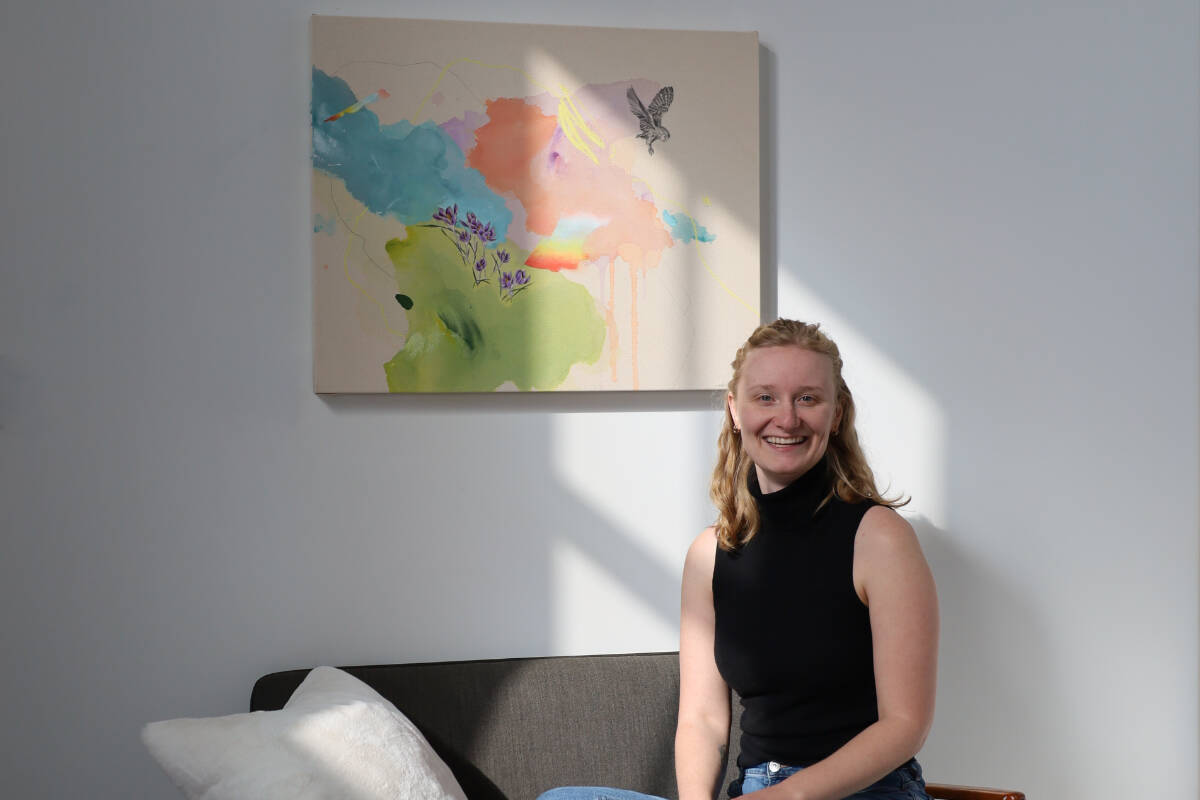
Recently completed, Jefferson found a rainbow appeared out of nowhere.
Only slightly perplexing for the artist; fully expected for the little girl’s dad.
The family hadn’t shared anything about a rainbow, but something urged her to add it.
“It felt like being six and drawing a rainbow in elementary school,” she explains. She let it go, but it wouldn’t let her go. Jefferson kept getting ads on courses about painting light hues.
She could only ignore it for so long.
“I added a rainbow to the painting, and it’s not something I would ever do,” Jefferson says. “I’m not a colourful person.”
That led to second-guessing, momentary panic to scrub it from the painting and a phone call to the family.
It’s a retelling that makes Troy laugh; it was just Lexi, he’s sure.
“We knew Lexi would be bossing you around,” he told Jefferson.
Lexi’s painting is among the 2026 works that will be on display in April, when families come to Nova Scotia for an event where a notable chef reads the stories and designs courses based off the artwork.
Then the families sit among the creations and enjoy a meal, connection and art – creating community.
Troy looks forward to the gathering and seeing the work in person. He’s confident Lexi was heavily involved in its creation, and it will resonate with her energy and excitement.
“When she would come into a room, the energy in the room would just change. She could make everyone light up.”
Learn more about the project or join the waitlist online at chanellejefferson.com/thegriefproject-grieveleave.
For more news delivered daily into your inbox, please click here.