It’s said that over 1,400 years ago, an Arabian man named Muhammad sat in the cave of Hira, near Mecca, deep in thought. During his meditation, an angel named Jibril visited him and revealed the first words of what would become the Qur’an.
According to some scholars, this moment, known as Laylat al-Qadr, marked the beginning of Islam, laying the foundation of the faith. Over the following two decades, the religion would develop gradually through prophetic revelations, until the five pillars of Islam would emerge.
These mandatory practices which guide the Muslim life and faith are namely the Shahada (profession of faith), Salah (daily prayers), Zakat (almsgiving) and Hajj (pilgrimage to Mecca) and last but not least, Sawm (fasting during Ramadan).
For centuries, these practices remained virtually unchanged, faithful to the original scripture, and this year, Feb. 17 marked the beginning of Ramadan.
Observed by roughly two billion people worldwide – about 125,000 of which are in B.C. – Ramadan is considered Islam’s holiest month and is best known as a period of fasting.
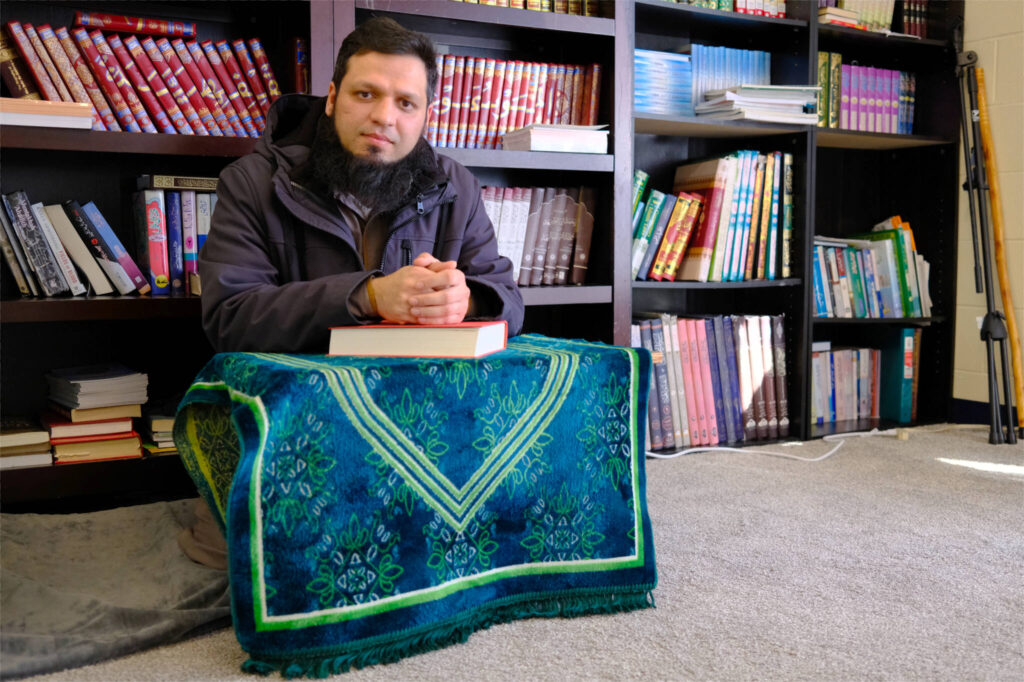
In an interview with the Goldstream News Gazette, Qasim Ayub, Imam of the BC Muslim Association Westshore Branch, explained the rudiments of this pillar which lasts between 29 to 30 days.
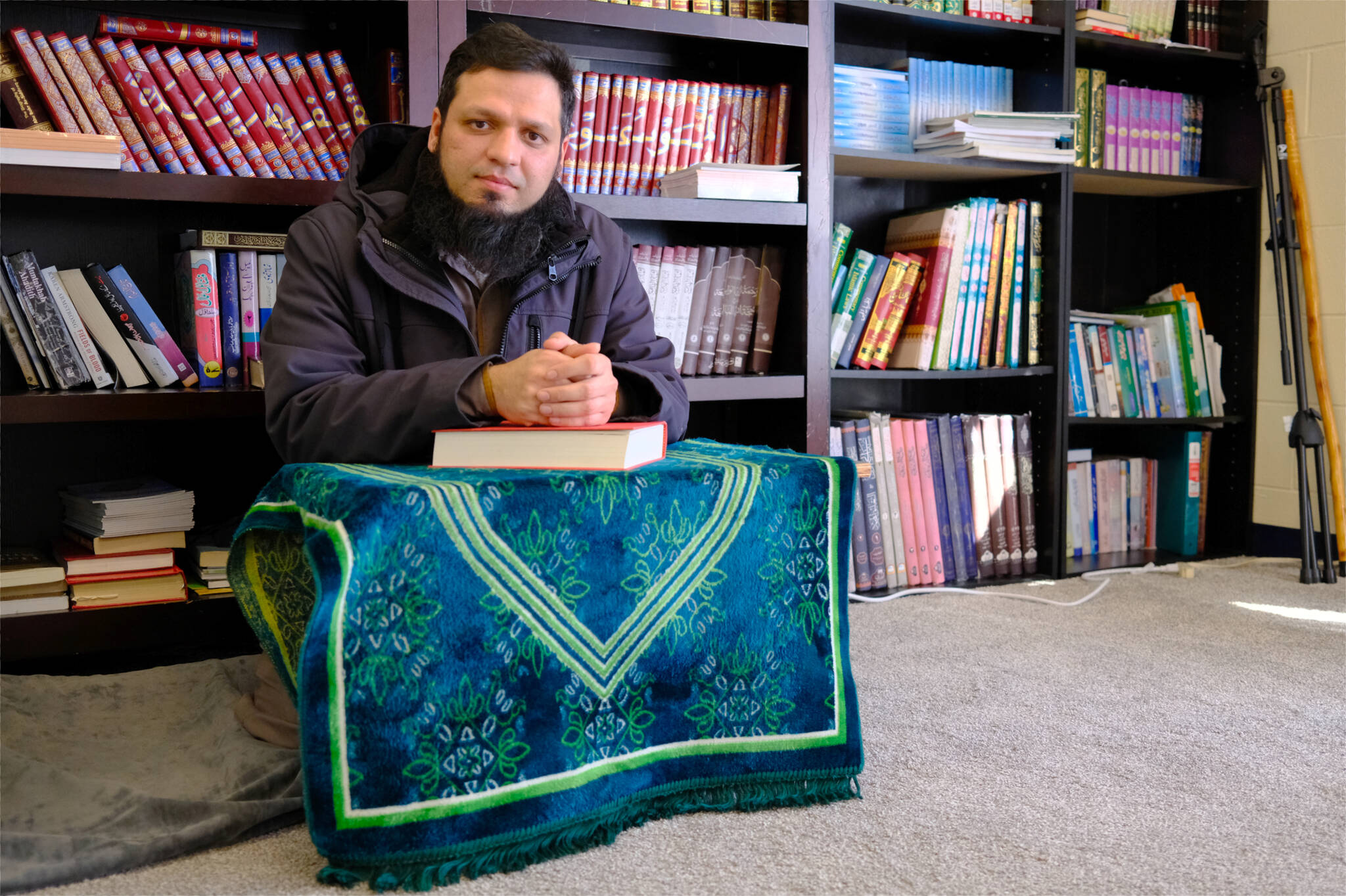
Qasim Ayub is the Imam of the BC Muslim Association Westshore Branch. (Olivier Laurin/Goldstream News Gazette)
Following the Islamic calendar, based on the lunar cycles, Ramadan takes place in the ninth month, starting from one sighting of the crescent moon to the next.
During this period, fasting is mandatory, from dawn to sunset, for all adults who are not mentally or physically ill, travelling, elderly, breastfeeding, pregnant, or menstruating. Believers can eat and drink only during suhoor, the pre-dawn meal, and iftar, the sunset meal.
Ramadan, however, extends beyond just fasting, Ayub explained.
“When we fast, we realize that there are so many people around the world who are hungry most of the time and don’t get clean water to drink,” he said. “So, we feel for them as well, while connecting ourselves to God, who has provided us with everything that we need.”
Describing the fast as both physically and spiritually beneficial, Ayub said it reinforces one’s connection to the divine and its teachings. Like an annual reset, it invites Muslims to look inward, returning to a state of humility and simplicity, while also emphasizing the importance of community and kinship.
“It basically shows us this is how we’re supposed to be throughout the next 11 months,” he said. “You’re not supposed to lie, you’re not supposed to cheat, you’re not supposed to swear at anyone, you’re not supposed to get angry at anyone and you have to be mindful of one another.”
Hauwa Bello-Kassim, a mother of three who frequents the West Shore branch, recalls her first Ramadan she first participated in at five years old back in Nigeria. While her parents and other adults told her she could eat if she wanted due to her young age, Bello-Kasim went through the entire day without eating.
“The second (iftar) was called, everybody lifted me up and were like: ‘You did it, you did it!’” she said. “I will never forget this moment. My dad gave me everything I wanted that day.”
This sole experience, she said, had such a deep impact on her that she understood the significance of Ramadan.
“As a child, (I noticed) that every year there’s a time of the month where everything becomes so special and there’s so much preparation going on,” she said. “Everybody’s kinder, nicer and more religious. There’s this feeling of togetherness that starts happening.
“During Ramadan I strive to be nicer, kinder, and support the next person – irrespective of their religion or ethnicity.”
During Ramadan, her day consists of waking up her family before dawn and the first prayer of the day is called, usually around 5 or 6 a.m. During the day, it’s business as usual, with her and her husband at work while the children are at school. Beyond fasting, Muslims are required to pray five times daily.
When evening comes, the family reunites at the dinner table. When the sun sets, Bello-Kassim explained that it is customary to break the fast with a date. Providing a boost of energy and natural sugars, dates are culturally significant as it was said that Prophet Muhammad used to break his fast with this small fruit.
While Ramadan can be both physically and mentally challenging for some, Bellow-Kassim welcomes it, adding that this holy month brings a newfound source of strength.
“You could bring all my favourite food and display them in front of me and it will not move me when I’m fasting, when otherwise I wouldn’t have that level of resilience,” she said.
Ramadan officially ends with Eid al-Fitr, which translates to the “festival of breaking the fast.” This major holiday begins at sunset on the first sighting of the new crescent moon, marking the start of a new month. Celebrations typically include communal morning prayers, feasting, acts of charity, exchanging or receiving new clothes, and visiting family and friends.
This year, Ramadan ends on March 26. While this holy month is observed by Muslims, Ayub extends an invitation to all residents of Greater Victoria and beyond to join the mosque’s daily iftars, for an opportunity to break fast, build bonds, and connect with one another.
“We are open for everyone,” he said. “We would love to see you and our doors are open for you. You can just come in, sit down and have some food with us.”