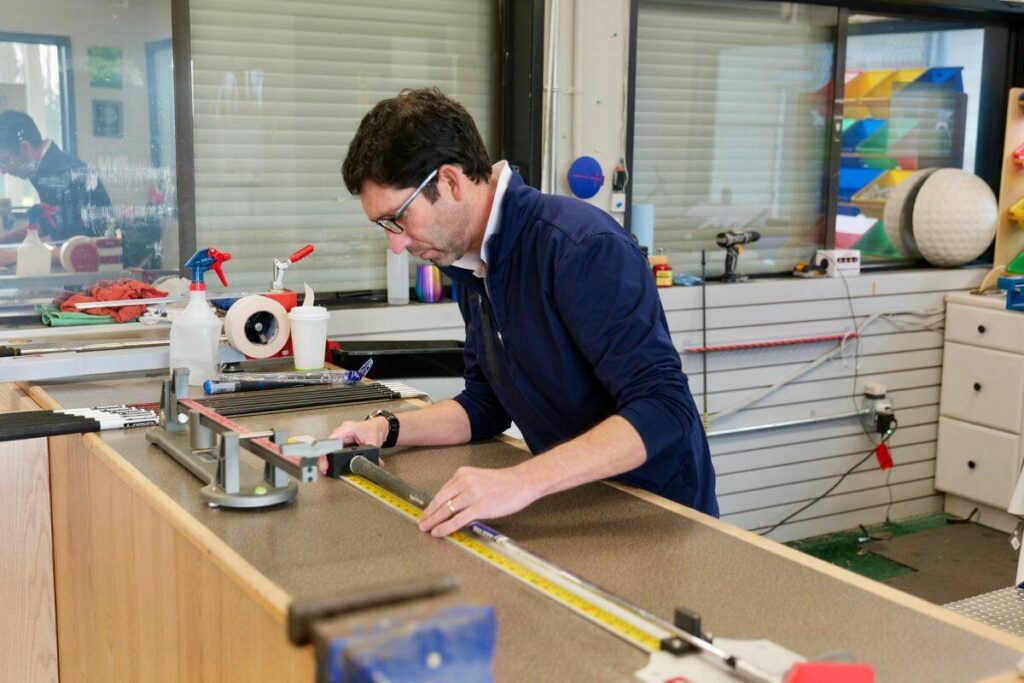
Laird White crouches over a workbench, a mid-size grip in one hand, a digital scale in the other, and a look that tells you he takes this very seriously.
“If we can pull 26 grams out of the club, suddenly it travels faster, and the player feels the club head better,” he says, eyes scanning the numbers. “It’s a small adjustment, but it’s huge.”
For a man whose work has touched some of the world’s best golfers, from Tommy Fleetwood to Justin Rose and Bernhard Langer, this is home.
“I love this stuff,” White says, gesturing to the wall of shafts, heads, and grips behind him. “Not the fame or the stats. Just helping someone play better.”
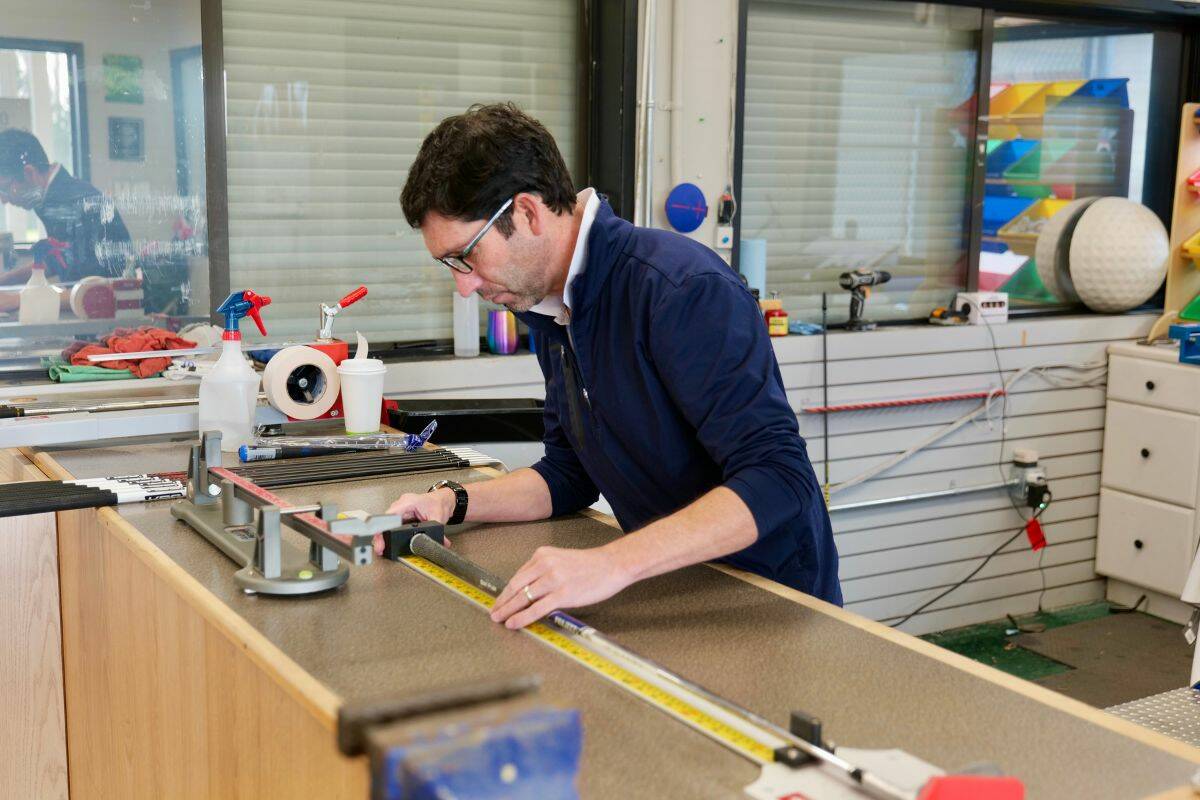
Laird White spent time honing his craft working with PGA professionals prior to joining Cedar Hill Golf Course. (Tony Trozzo/Saanich News)
White’s path to Cedar Hill, and to the upper echelons of the PGA Tour, began far from grips and carbon steel.
Raised in Niagara, Ont., White was a multi-sport athlete as a kid.
“I was 15 when I got my first set of clubs. I actually asked my parents if we could take them back. I had no interest in golf,” he recalls jokingly.
But golf’s challenge, its solitude, and the precision it demanded hooked him fast.
“I was a tinkerer,” he says. “I’d take my clubs apart, try to adjust them, ruin them, and learn from it. That curiosity became my career.”
That curiosity eventually led him to Toronto, where he spent over a decade at The National Golf Club of Canada, one of the country’s top-ranked courses.
There, White earned recognition for his coaching, being named the 2011 Ontario PGA Coach of the Year for developmental athletes, and he built innovative learning programs that left a lasting mark on Canada’s junior golf scene.
His early work caught the attention of Titleist, where he helped build the National Fitting Centre.
“You had to be a single-digit handicap to get into my schedule,” he says.
“I cut my teeth with the best players in Canada, figuring out what equipment supported their game. That’s where I really learned the science behind it.”
That science eventually brought him to the PGA Tour, where White became a go-to expert for ball flight analysis and club fitting.
He explains the fundamentals that guide all his work: “A golf club is really three things: the grip, which we can change and adjust; the shaft, which is about weight, length, flex, and composition; and the club head, which can vary depending on the player’s style and caliber. Once you understand those, everything else falls into place.”
And with some of those fundamentals, he remembers one defining session with World No. 10 Justin Rose.
“We were testing new irons, and the spin rates were off by 800 RPM,” White says. “I stopped the session, got the team to adjust, and thirty minutes later, it was perfect.
“ That earned his trust. That’s everything at that level.”
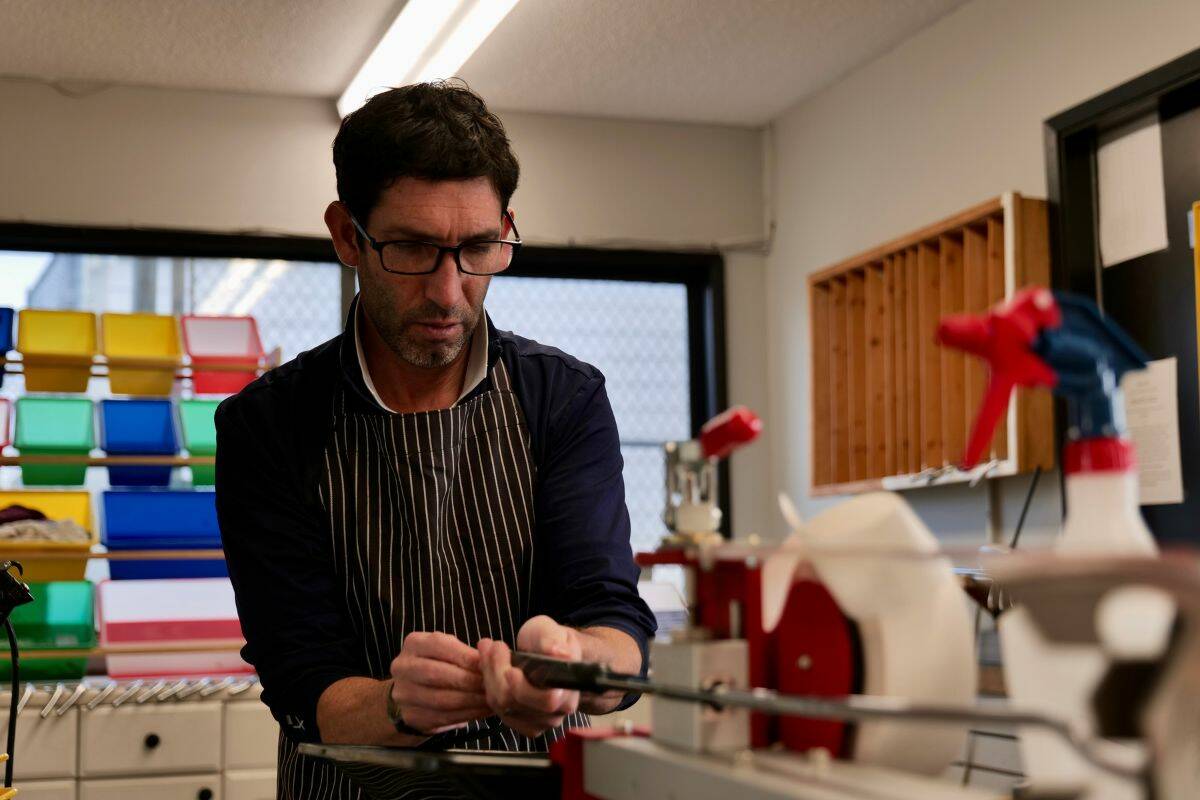
White has also worked with Fleetwood, whose Honma blade he customized down to the smallest detail, from club weight to logo placement on the grip.
“He likes the grip logo hidden so nothing distracts him,” White explains. “Every tiny detail is measured against what feels right for him.”
Bernhard Langer’s clubs were another puzzle, with ribbed grips rotated to 11 o’clock instead of the usual 12, helping him keep the club face from closing and missing left.
“It’s precise, but it works for him. It’s their system,” White says.
Now, at Cedar Hill, he brings that PGA Tour-level precision to golfers of every level.
“The better a golfer, the more they can adapt to equipment,” he says.
“The less skilled, the less they can adapt. Often, it’s the higher-handicap players who see the biggest gains.”
Even minor changes – a new grip, a loft adjustment, a weight tweak – can add 10 yards to a drive, shave strokes off a round, and completely change a player’s confidence.
White approaches fittings as collaboration, not prescription.
“We measure the club, test it with the player, explore adjustments,” he says. “If there are gains, they decide to put new equipment in the bag.
“If not, we validate what they already have. It’s transparent. It’s all about the player.”
He still consults occasionally with PGA Tour players, offering guidance remotely, but his focus is on Cedar Hill.
“We have just shy of 67,000 rounds of golf here,” he says.
“Helping these golfers play better and enjoy the game more, that’s what matters.
“It’s not the clubs themselves, it’s what they allow the player to do.”
So before you order your next set of clubs or swap out equipment chasing a few extra yards, White suggests slowing down.
A few small, thoughtful adjustments can make a bigger difference than any box-fresh purchase, and at Cedar Hill, that kind of care is still part of the game.
READ MORE: ‘You can never defeat golf’: Saanich pro finishes 365-day consecutive streak