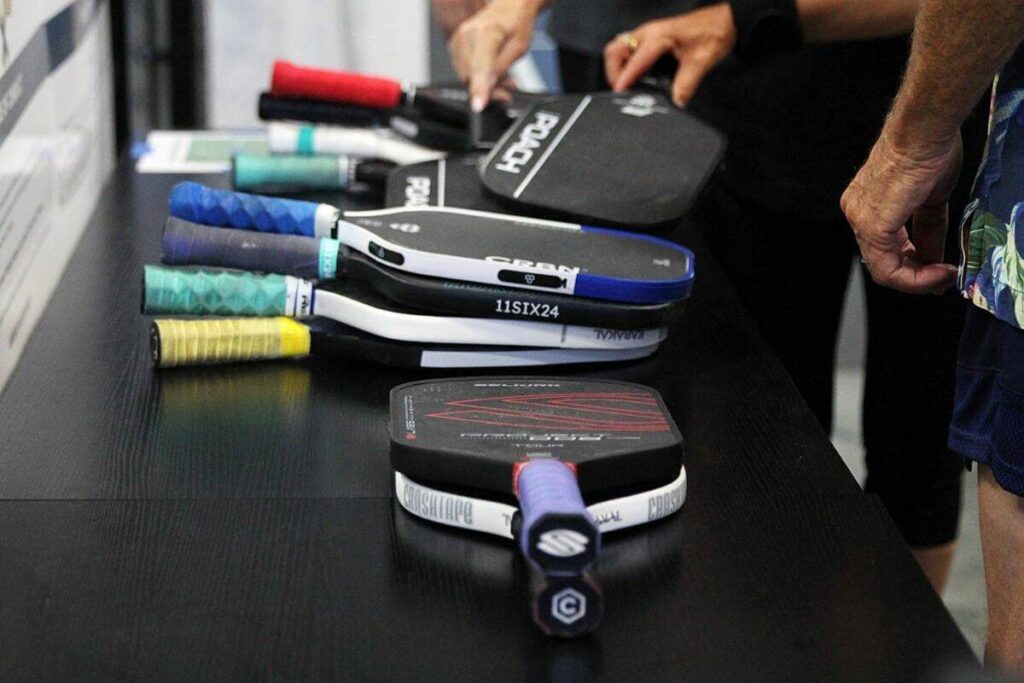
The crack of a pickleball paddle echoing across B.C. courts might sound harmless. But according to Shawnigan Lake Pickleball Club director Leanne Schultz, that unusually loud pop could be a warning sign.
Schultz is raising concerns about what are commonly referred to as “crushed” or delaminated paddles, equipment she believes threatens both the integrity and safety of the sport.
“The amount of effort in the stroke gets a disproportionate response off the face,” Schultz said. “The ball comes off very fast. In some estimates, it’s up to 50 per cent faster. Above that, it’s beyond human reflexes to respond to.”
Pickleball paddles are constructed with layered cores designed to provide controlled responsiveness.
Over time, or in some cases by design, those cores can break down, creating a trampoline effect that sends the ball off the paddle face at excessive speed and a higher launch angle.
“When you’re at the kitchen line, you’re only 14 or 15 feet away,” Schultz said. “If somebody hits one of these and it comes into your face very fast, you can’t even get out of the way. You’ve got your teeth, your eyes, your nose. It feels aggressive. It feels threatening.”
Schultz said the issue is particularly concerning for women and seniors, two of the largest demographics in pickleball.
“For the ladies, it’s getting beyond what we can do,” she said. “Our reflexes just aren’t fast enough.”
She also argues crushed paddles skew competitive balance, especially in leagues and tournaments where results feed into player DUPR ratings.
“If you’re playing against somebody with an unfair paddle and they’re winning more points than they should, it skews things,” she said. “You just want a fair playing field.”
According to Schultz, signs of a crushed paddle can be subtle but detectable.
An unusually loud sound, even audible from the parking lot, is often the first clue. Pressing thumbs into the paddle face may produce a crackling sound or reveal sponginess, both indicators of damage. Over time, the face may also become noticeably shiny.
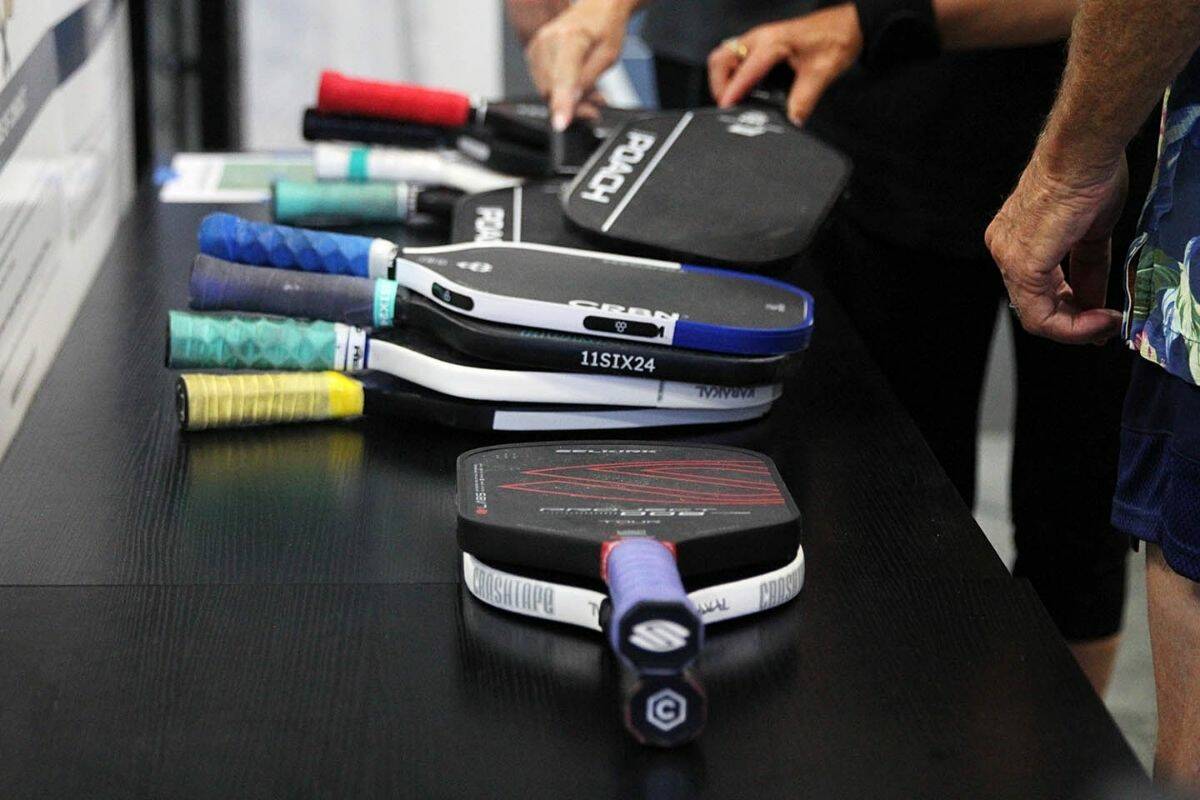
An unusually loud sound or a spongy paddle face can be early signs of a “crushed” pickleball paddle, which some say alters how the ball comes off the face. (Photo courtesy of Vancouver Island Pickleball)
“At Shawnigan Lake Pickleball Club, where I am a director, we have been on top of this problem for one and a half years,” Schultz said. “Damaged paddles are identified and players informed.”
She said most players are unaware they are using damaged equipment and stop immediately once it’s explained. Others are encouraged to have paddles tested at local retailers.
During DUPR-rated sessions, Schultz warns participants in advance that damaged paddles are not allowed and that suspect paddles will be checked before play begins.
Schultz estimates she has helped identify close to two dozen crushed paddles off the courts through education alone.
“It astounds me how few people are aware of this very great threat to the integrity of amateur pickleball,” she said.
As the sport continues to grow, Schultz believes awareness is the most immediate solution.
“If the governing body won’t act, then pickleball players need to act,” she said. “People need to understand this is a thing. Once they know, they can recognize it themselves.”