By Barb Brouwer
Contributor
Long-simmering frustration has boiled over into anger.
As they wait for what they deem critically required infrastructure improvements, Shuswap Lake General Hospital (SLGH) doctors believe the province and the Interior Health Authority (IHA) view the hospital as nothing more than a name on a list.
Tired of repeatedly seeing promised projects cancelled, doctors are again pushing for updates on the state of current plans for the OR and High Acuity Unit.
In a Nov. 16 email, Chris Simms, executive director, Interior Health North Okanagan, said SLGH remains focused on operating efficiently while delivering high-quality care.”
“Facility needs are continually assessed, and both minor and major maintenance projects are prioritized to support safe, reliable care,” he said, pointing out IH provided the Local Medical Advisory Committee with an update this year and also remains committed to keeping doctors informed, noting “This work is supported by ongoing capital planning and infrastructure development, with a clear commitment to aligning priorities with the province.”
Anesthetist Dr. Andrew Sellars, who has worked in the hospital since 2002, has a different view on the state of the building’s infrastructure.
“The hospital doesn’t meet accreditation standards in a number of areas, including the high acuity unit or the wards,” he said, pointing out elderly patients with dementia are cared for in the same rooms as paediatric patients. As well, a lack of storage means every available nook and cranny, including hallways, are crammed, in some cases preventing egress. “None of this would meet the standards of a modern hospital.”
Sellars said renovations to the OR took place with Covid funding to help reduce the backlog of cases from Royal Inland and Vernon Jubilee hospitals.
“IH took over the doctors’ lounge to create a sterile storage area for equipment, allowing us to increase our capacity by 50 per cent, without improving our operating spaces or patient care,” he said. “In fact, it made everything more cramped and busier, but we still did it.”
Sellars addded that tiles are falling off the walls and lifting off the floor in the basement due to damp from a stream that runs beneath the hospital. A painter who visited the hospital spied tape he had put on a wall to cover chipped paint five years previously.
He said 25 years ago, doctors and staff were told planned hospital improvements were listed as the highest priority within the health authority, but nothing more than a few ”band-aid” projects have been undertaken.
“We’ve been waiting for 25 years and nothing is scheduled to be fixed this year or next,” he said, maintaining rural hospitals such as those in Salmon Arm, Fernie and Revelstoke are ignored, while funding goes to larger secondary and tertiary hospitals in the health authority.
He said IH board chairs have visited the hospital over the years and expressed their concerns regarding the state of the facility.
“If you’re not Kamloops or Kelowna, you’re a second-class facility; then there’s others like Trail, Cranbrook, Vernon and Penticton, which have all received upgrades or new hospitals in the last 25 years. And they weren’t as bad as our hospital.”
When the “new” emergency department was built, engineering plans included a future addition to be built on top of the site. But engineers now say the building is not structurally sound. That means, in order to establish a suitable site, another utilization plan must be drawn up – to the tune of $500,000, he said.
And no one can guess how many more years that will add to the process, said Sellars. A plan created for the hospital’s first CT Scanner in 2001, was approved in 2009 and installed in 2011 – already 10 years behind the latest available equipment.
“The Imaging Department is well built, but all other departments are in desperate need of upgrading,” he said. “That’s one area we can be proud of, but what’s the point of diagnosing patients and then having a crappy facility in which to care for them. To me that’s a failure of the system.”
Sellars believes that to capital planning staff, Shuswap Lake General Hospital is viewed as a name on a list that has to work its way to the top of the priority list.
IH and Ministry of Infrastructure response:
Meanwhile, Simms’ list of recent investments and projects at the hospital include: upgrades to the pharmacy and mammography services; maternity unit enhancements including a new door; emergency department upgrades and enhancements, including a new infection control sink; new garden, upgraded door to main entrance; infrastructure upgrades, including two new sterilizers for medical device reprocessing department; upgrades to Level 4 rooms and new access control system for staff.
An email from the Ministry of Infrastructure maintains the ministry recognizes the need for further redevelopment and expansion and will continue to work closely with Interior Health to build and upgrade the health-care facilities people need in the region.
The email also points to capital investments of $2.9 million for the pharmacy renovation, $500,000 for hot water loop repairs, $2.1 million for CT Scanner replacement in 2022 and an OR expansion completed in 2021.
However, Shuswap Hospital Foundation Annual Impact Reports indicate the foundation contributed $5 million to the hospital between 2020 and 2025. Thanks to members of the community, the foundation covered $1.6 million of the cost of the scanner and the Columbia Shuswap Regional Hospital District contributed $627,250. The foundation also donated $1.77 million for the mammography unit, with the hospital district kicking in another $484,500. As well, the foundation purchased one of the two new sterilizers along with a $59,000 decontamination sink in the same area, contributed $45,556 for the reverse osmosis water system and contributed another $43,000 towards the purchase of a door for the maternity unit.
Dr. Scott McKee
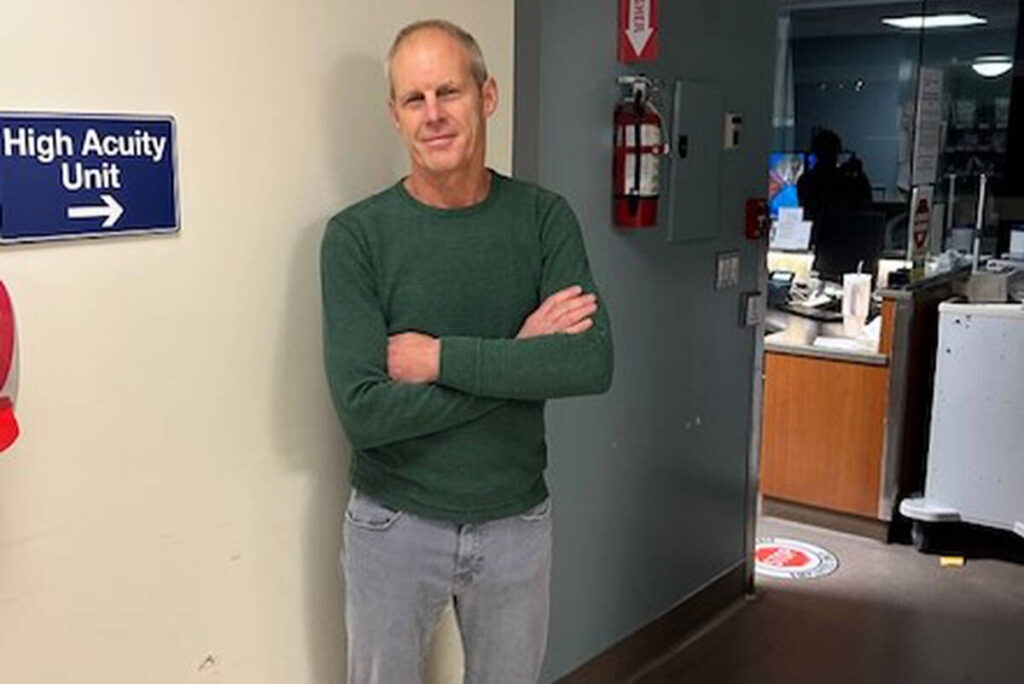
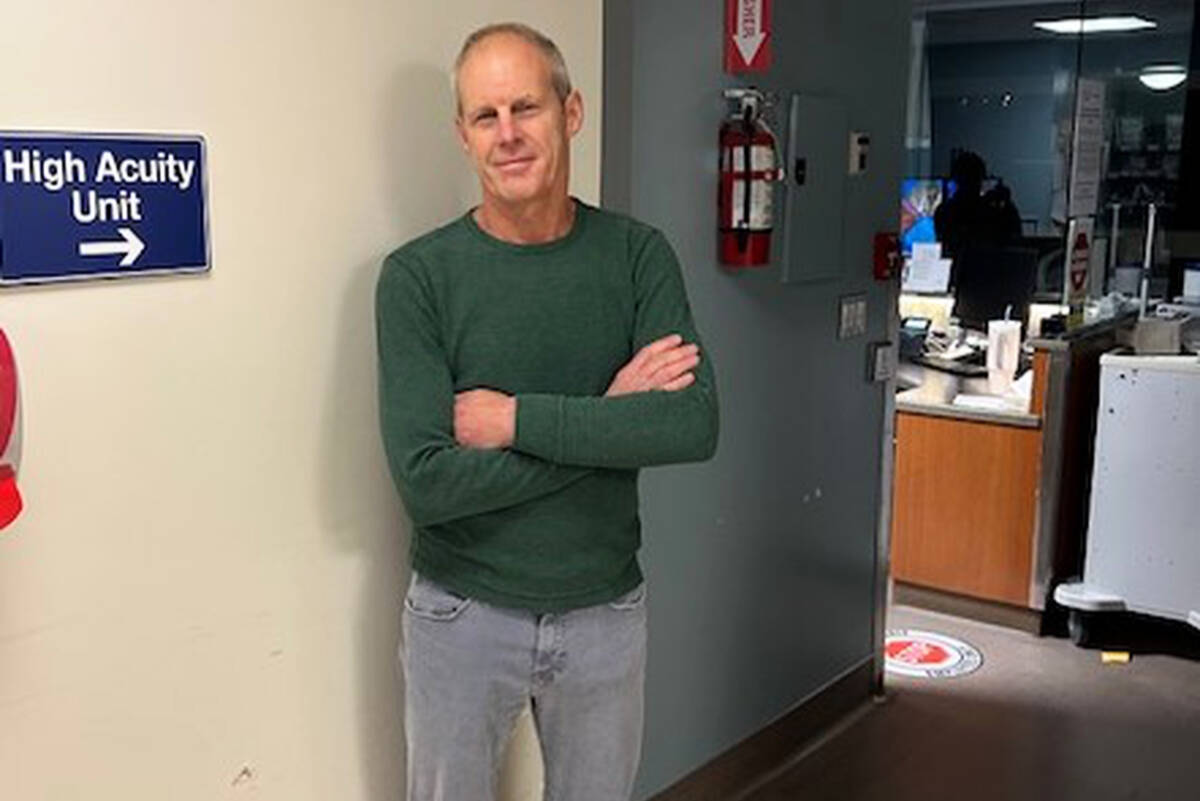
Newly retired staff internist Dr. Scott McKee was previously head of Internal Medicine and Critical Care, the group that oversees the three-bed High Acuity Unit (HAU) that houses critically ill patients including peri-operative cases and almost all cardiac admissions.
McKee recalls that a master utilization plan for expansion of the OR, HAU and wards was completed in 2006 but never funded.
“We finally realized that no one in IH seemed to remember the original commitment, and we learned there was no new plan in place of the old,” he said.
With pressure from the medical staff, IH funded a “collaborative” design process that led to the creation of a formal modernization plan for the ORs, HAU, Ambulatory Care and Medical Device Reprocessing (MDR) in 2017. McKee said the plan was then sacrificed during the Covid 19 pandemic, and clinical service was further crippled by staffing shortages. As a result, critical-care patients were frequently moved to the emergency rooms, which impacted service all down the line.
In June 2022, IH produced another planning phase primarily for OR redesign, but funding was withdrawn four months later, and the project downgraded to “ill-defined” minor renovations, he added, noting medical staff returned to the drawing board.
Following presentations to city council and the regional hospital district in 2023, IHA met with staff to once again discuss priorities and consider the options. The result was funding for renewed planning of up to $250,000, which was approved in February 2024.
“Since that time, we have seen no movement and received no updates,” said McKee. “After patiently waiting for more than a year, we are currently unable to learn from any IHA source, including our own director of operations, what has happened to that funding, or to the priorities for the hospital.”
He added that, in the meantime, staff makes do with constant overcrowding in a unit that now requires two nurses to be on duty 24-7, while trying to accommodate physicians on rounds and various medical trainees.
“Overflow equipment adds further congestion, with patients separated only by curtains and sharing a single 25-square-ft. bathroom,” he said. “Infection control remains sub-optimal.”
McKee noted that, nonetheless, there have been some recent wins. Dr Michael Klonarakis from the University of Calgary joined the Internal Medicine group full-time and nursing staff levels have improved, resulting in fewer temporary HAU closures.
“But the pattern is well-established,” said McKee. “Medical staff agrees on relative priorities; we do our best to share them with the IH, and every so often we all engage in meetings and see some real work get done. Then, the process dissolves and nothing moves forward. I can’t explain it.”
Dr. Stephen Hiscock
Surgeon Stephen Hiscock also has a problem with Interior Health’s capital planning process.
“You apply for a project and demonstrate your need,” he said, noting that according to the IH scoring system, there are other needs greater than those at SLGH.
As to allowing input from local sources, Hiscock said that two years ago, while he was head of surgery, he attended an initial meeting with IH regarding new operating rooms for the hospital. When he arrived, several people were enjoying pizza in a convivial atmosphere and told him he did not need to be present as the committee had the situation well in hand.
“They always espouse having doctors involved, then schedule meetings on Tuesdays at noon,” he said, pointing out most doctors are busy providing patient care at that time. “IH makes lame excuses. They’re absolutely obstructive. It’s just miserable.”
Not only was Hiscock rebuffed, but his efforts to have members of Splatsin, Neskonlith and Adams Lake bands included at the planning table were turned down.
“We weren’t getting anywhere, so I reached out to Indigenous communities because I wanted to take them to the next meeting,” he said, pointing out how delighted the band leaders had been to be included and how embarrassed he was to have to rescind his invitation. “IH said no because they had already received Indigenous input – from a West Kelowna Band. We’re just asking for a seat at the table for planning and construction.”
Another frustration Hiscock shared is that while SLGH provides care to many patients from the North Shuswap, Chase, Enderby and even Armstrong, their numbers are not included in local data because IH insists people from those communities are supposed to go to Vernon or Kamloops.
“People don’t want to go to Kamloops or Vernon,” he said. “There is a reason they come here and part of it is free parking.”
Simms, however, maintains that IH relies on each hospital site to provide patient presentation and admission data, which is reported at regular intervals. While population data is reviewed through local health service planning teams, this work is done at a higher level and is separate from patient volumes at specific sites. Both Interior Health and the Ministry of Health base historical census figures on the number of admissions, regardless of patients home communities, he said.
But Hiscock said that after multiple requests over the span of one year, IH eventually provided patient data that showed SLGH surgeons perform four appendectomies a year.
“We’ll do this on a weekend sometimes,” he said.
Meanwhile, Sellars said other than the state of the infrastructure, the hospital is a fabulous place in which to work.
“The nursing, support staff, physicians and local administrators are fantastic! They are deeply embedded in the community and committed to their patients and each other,” he said. “It’s a great environment to work in and, for the most part, people like working here and working with each other.”
Sellars is the former senior medical director, and until recently, medical director of physician engagement with Interior Health.
“I have become quite cynical. IHA didn’t want to hear the feedback I had collected from doctors all over the health authority,” he said, noting that his one-year contract with the committee was not renewed and his administrative partner, Jarnail Dail, was fired after 19 years with the health authority. “They said they were fully engaging with physicians, but they fired the two people whose job was to bring doctors to the table.”
Read more: ‘It’s an archaic failing space’: Salmon Arm physician warns critical care in hospital in jeopardy
Read more: Shuswap doctor appalled with state of local hospital
Where does the blame go?
“We’re told the government is aware of our request, but funding is on hold again,” said Sellars. “I was their biggest cheerleader for the last five years and they have consistently let me down.”
A last-minute email response from IH indicates that: The High Acuity Unit at SLGH remains under review and Interior Health will provide further direction once a decision has been finalized.
And the response to a question as to whether a plan for the construction of a multi-million dollar peri-operative centre has been at the Ministry of Infrastructure since January, is that “the business plan was submitted to the Ministry of Infrastructure in early 2025 alongside plans from all health authorities as part of the annual capital planning process.”
While doctors and staff wait for results, a new SLGH cheerleader has emerged as Shuswap resident and MLA David Williams said he fully supports the concerns raised by the physicians regarding deteriorating infrastructure and the continued lack of transparency around long-promised upgrades.
“SLGH serves not only Salmon Arm but the entire region as a primary referral and emergency centre, and its infrastructure has simply not kept pace with rapid population growth, rising clinical demand, or its essential regional role,” he said in a Nov. 26 email, extolling the exceptional care provided at the hospital.
“I am committed to pressing Interior Health and the provincial government for immediate transparency, a clear and credible modernization plan, and the level of investment this hospital and region urgently deserve,” he wrote. “My intention is to have a strategic plan based on facts and advocate for hospital improvements or expansion as well as adequate staffing to support the regional demand.”
Read more: Hospital auxiliary tops CT scan fund
Read more: Fundraiser will help create new mammography unit at Shuswap Lake General Hospital